All Activity
- Past hour
-
208weirdo joined the community
- Today
-
They were never sold new here. But I guarantee there are more EJ Dual ranges here than there are RX dual ranges (probably RX and XT6 transmissions combined) Sounds like you've got it figured out. Let us know how it works.
-
My go-to trick is to wrap the parts in a reflective tape. My typical high-temp material of choice is PC but I find that it can become brittle after being used in high temperatures over a long period of time. Wrapping the parts in a thermally reflective material seems to help quite a bit. Obviously you have to take the thickness of the tape into consideration when you're designing the part and thermoplastics will always be thermoplastics. All materials are limited. If these could be provided as kits in the future, that'd really be awesome to see. DIY kits will keep these cars alive. If we come together as a community we can keep our cars going. :]
-
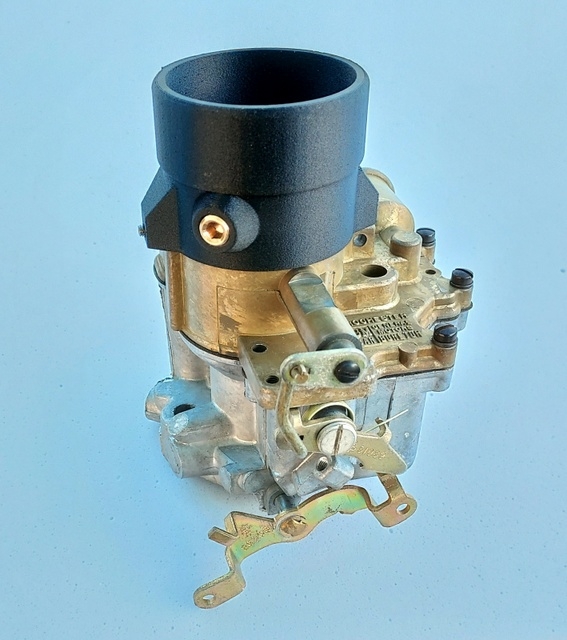
A good, general precaution for those who don't understand the limitations of 3D printing. I'm the Principal R&D Engineer at work (26 years) and my team prints technical FDM parts literally all day long. I'm using ASA on this project and after a month of driving around in the Phoenix heat, I see no signs of distortion or warping on my TPS adapter. I have made allowances to install two small aluminum compression stop ferrules if needed but so far, I see no signs of heat deflection being an issue. I could also switch to using PA6-CF filament if I needed but it is more difficult to print and 3 times the cost of ASA. Here is a pic of some PA6-CF air filter adapters I designed and sell to the Corvair crowd. These survive much higher under-hood temperatures than you would ever see around the intakes of our water pumpers. Corvair engines often see 400F head temps and 250-260F oil temps and the heat soak when those engines shut down is pretty severe.
-
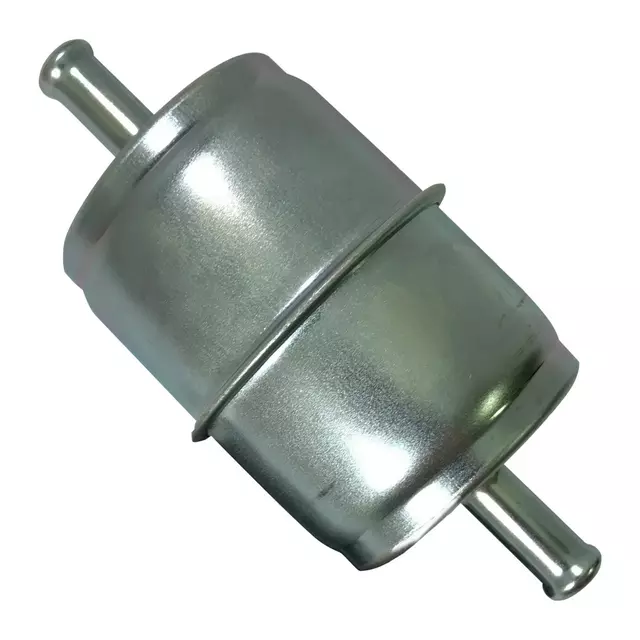
My 87 DL tank was full of very fine silt/debris and the only thing that fully cured the problem was removing any type of filter/strainers inside the tank and then install a large, external filter just ahead of the pump. During the diagnosis, I could remove the exit line with a full tank of fuel and yet nothing would come out when it should have been gushing. I removed the fuel cap to be sure there was no issue with a vacuum being formed in the tank but that did not help. I blew into the line backwards using compressed air and it cleared the clog and fuel flowed freely but that only lasted about a week before it was clogged again and the pump began whining. My pump will begin the whine pretty loudly when the input is restricted so I know when to change the filter and after the second filter change, I seems to have captured all the old junk and now the pump stays completely quiet and I haven't had to change the filter in over a year. Out of curiosity, I cut open the first filter that was clogged and it was filled with what looked like fine gray chalk dust. Not sure what it was but it's flushed from the system now apparently. If you don't want to remove the tank right now, you can try to blow compressed air into the line and see if that temporarily clears the clog or if you are lucky, it might pop off any strainer or filter sock on the pickup tube. Just make sure you have a good filter ahead of the fuel pump at all times.
- Last week
-
lmdew replied to wtdash's topic in 1990 to Present Legacy, Impreza, Outback, Forester, Baja, WRX&WrxSTI, SVXOnly 1 pivot point is used. Either should work I believe. Since the HYD parts all mount to the engine block, I would think it would with the 92 trans. It seems to be less work. The cable option should work as well if you change things over. The starter bolt configuration will also need to be checked. I know I had to install a helicoil and stud in the transmission casting for the missing engine block bolt studs. Inner CV configuration? Just another thing to check. Hope it goes well.
-
Also, I am totally on board with getting a new tank rather than stuggling (and failing) to clean or fix this one. This tank has two pinholes at the top of tank already, so I know it's not worth keeping. I just wanna try and get it flowing, so I can at least have fun driving it around town. I may hopefully be able to get a tank I found from someone on facebook, but we'll see. Who knew that trying to source a gas tank for a 40 year old car would be so hard! 😁
-
Lol took me a bit to get around to this, but also, I've been taking time to try and get this thing cleaned up. I was "encouraged" by the car itself to start actually working on this thing, since it actually died on a test drive around my neighborhood. The short version of what I did: I cleaned out the tank with water and let it soak in vinegar for a few days, then washed rinsed it out with gas to get as much of the vinegar out as I could. This seemed to clean things up but is also loosened up flakes of rust and varnish, which, after putting the tank back in the car and running it clogged up the lines in the tank, but didn't luckily get into the engine as far as I can tell. I took the tank back out of the car again, and setup an old pump with a filter to a power supply and used it like a mini-vacuum cleaner, taking one end of a line and picking up chunks of gunk. This worked pretty well, and got most of the big chunks out, however gas still seems to struggle coming out of the tank, which is where my questions begin for you wise techs out there. The first thing I notice is that, with my pump bench setup, when the pump is running, there seems to be a bunch of air bubbles viewable in the filter. This seems unusual because when pumping gas directly from a can, I don't see these bubbles at all, at least, very little of them. It does this while the tank is in the car as well. Here is a video of what I mean: https://youtube.com/shorts/H7jIOtXonMo?feature=share In this setup, gas is coming out of the outlet and then right back into the return line. According to the manual, there is an internal filter inside the tank, and I am thinking that that filter may be clogged up with gunk still and that is why the pump struggles to get anything out of the tank, but I dunno about those bubbles in the gas... If anyone has any wisdom that would be much appreciated.
-
I have owned EJ AWD subarus, with open center diffs, and know from experience they have much less issues on these same roads. Now, there are plenty of other differences - tires, suspension, vehicle weight, etc - but it makes sense that if you only put half the torque to the front axle, you'll spin it a lot less.
-
EJ dual ranges do not exist in the US, and I want the ability to lock the center.
-
FT4WD will be the same. Locked will bind up, unlocked will spin. Front LSD helps, but center LSD is better. If you've already got an EJ engine, get an EJ dual range. Swap your low range gears into it. Better traction, better clutch, better availability. You have a .780 5th gear. Many EJs have a .738 5th gear. So you could switch to a 4.111 or even 4.444 pretty easily and keep your highway gears.
-
I just caught this post. I had a similar problem with my '09 Forester. It was acting as if i had dual climate zones - thats how big the temperature difference was between the two sides of the car. It turned out that not only was I low on refrigerant, but my O Rings going to the compressor was leaking. -Justin
-
Weber 32/36 carb; no computer thus no codes; new electronic control module; new fuel filter; no vacuum leaks; new idle mixture screw; new alternator; new plugs Pulled top of carb and found float bowl/fuel up to proper adjustment. All external carb controls sprayed well with lube. Can of Seafoam ran thru fuel system w/o change. Choke properly adjusted. Car has ran just fine since I installed the Weber last year, but now................. Any brilliant ideas? PM me @ egowing19466@gmail.com
-
Hi, Edit: too much is different. The pivot ball mount is incorrect for the Hydraulic-actuated clutch release fork and it's misisng the top two holes on the trans bellhousing for the clutch's master/slave cylinders, both of which would work if I switched to cable clutch setup (probably). Looking at buying a 1992 Legacy, freshly rebuilt, 5-speed from a Legacy: TY752VA2AA And putting in my 1998 Forester that has a TY753VJ1AA. They are both 4.11 FDR. Main issue is I just noticed is that the '92 is a Cable clutch and '98 is a hydraulic. The '92 doesn't have the 2nd pivot ball mount for the clutch release shift fork. Anyone know if I switch to a cable clutch if that'll still work in my '98 Forester? I have a cable clutch and pedal setup I pulled from a '96 Impreza, so that should fit the Forester, which is based on the Impreza or vice versa. 1992 one mount: https://imgur.com/a/ChJ2f59 Newer two mount: https://imgur.com/xCDImPe Thanks
-
I would be very wary of 3d printed thermoplastic parts anywhere near a hot engine...
-
Thanks! It does look like they are mostly being shipped from China. I'll hold off on ordering one until you follow up with your experience. I really appreciate all your work on this!
-
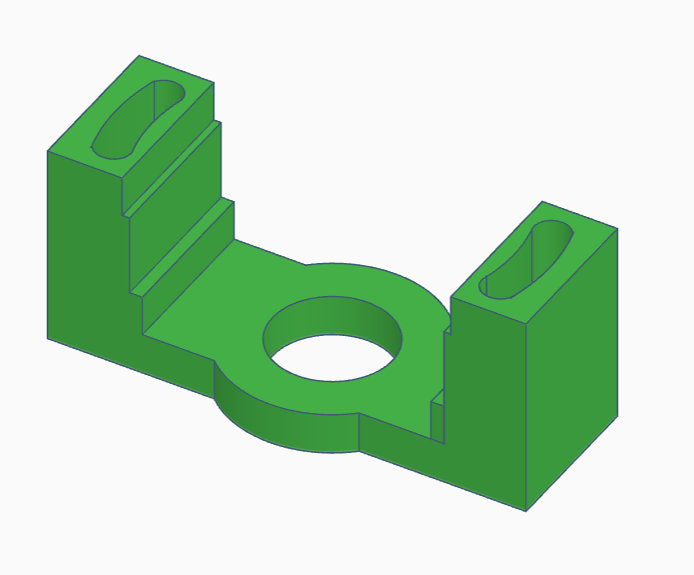
The ebay seller just cancelled my order for the SERA484-10 TPS saying they don't have any in stock. I've just now placed and order with an Amazon vendor instead and I wonder if it is the same seller. I'll find out in a week or so. Apparently, no one has these in the USA or they are stupid expensive if they do. I suspect the Amazon seller is shipping from China. Here is a graphic of the holder I am 3D printing in order to cradle the new TPS in the reverse position. The two slotted holes allow for the idle position contact switch setting to be adjustable. I'm not going to print more brackets until I have the new TPS modules in hand, just in case they are not identical to what I am using now. Stay tuned! I'll reply back here but also start a new how-to thread if this all works out.
-
Yes, after clicking through it, it's not as good as it looks and very clunky to get to anything. I'll just order the 1982-Subaru1600 1800 ENGINE AND BODY SERVICE MANUAL from eBay, there are several to choose from at a reasonable price and for my year also. Bill Rigsby - Florissant, CO - 8,335 feet 1982 BRAT GL
-
That sucks Numbchux! I haven’t experienced that as I fitted mine with a front OBX LSD. On one or two occasions I managed to spin the front wheels on a loose road when taking off hard. EJ22 powered. I don’t drive like a maniac so my gearbox lasts a long time ;) Me too. Maybe one day I’ll do the 4.44:1 diff ratio and lower 5th ratio… Like Lego! But mismatch gear ratios will do that very quickly! Even gearsets of the same ratio will do weird things and end up popping at some stage due to different wear over the life of the gearsets being matched together.
-
It's ALLDATA pirated and put on a web site. ALLDATA is... different. It can range from extremely good to utterly wrong.
-
I have an EJ22 right now. I briefly had an EJ25, but got sold a bad block (was told it was perfect; instead rod knocked like a jackhammer) and had to pull it the next day, will probably rebuild it and try again at some point. I have an OBX for the front and a TORQ Locker for the rear. Don't need low range? I wish I could get 2:1 or better - my 1.59:1 low range isn't low enough! I am so sick of constantly switching in and out of 4wd, or needing more traction but then having to deal with binding, or it getting stuck in 4wd and needing to do the dance to get it out, or tearing up a loose driveway while making sharp turns, or wanting to put it in 4wd just for less slip up a hill but don't because I know it will then bind on a corner at the top of the hill, etc etc etc... I've been wanting AWD for a couple years now. Now that my dual range is getting worn out to the point I have to rebuild or replace it soon, trying to figure out what it would take. I'm not worried about the lack of a linkage. I was already thinking a second vacuum pod and another switch would be a really shiny solution. Pushbutton low range! But, I have no idea what the gear interchangeability is. I don't want to go to 4.44 unless I get a super high 5th at the same time... I'm already at 3200rpm on the highway and burning $50+ of gas every day... Found https://www.ultimatesubaru.org/forum/topic/95638-411-awd-dual-range-in-legacy/ , which shows you can put EJ lower shaft with EA dual range upper shaft... except theirs promptly exploded. But the explosion may have been due to ring gear bolts backing out. But that thread also has tons of wrong information, like saying the EJ AWD and the RX FT4WD pinion shafts are the same length, which I've seen pictures showing is very much not the case. Sigh.
-
Winston85 joined the community
-
Different weights/viscosity definitely affect handling! There is a big chart online someone put together that breaks down the actual viscosity of different brands and "weights" (which is apparently a pretty arbitrary thing) of shock oil. In the Subarus we used the Fox JM2 oil but it is expensive so recently we've been using Sunoco Sunvis 1015 or Glacial Blu by Kendall. Those three are fairly equivalent. In your specific case I really don't know.
-
I've played with these, swapped gearing, diffs, etc. many many times over the decades (I've posted a lot of it here, search for my posts. Although most of the photos are probably gone). I have a little information in the Retrofitting FAQ. Here's a "quick" overview. RX is the ONLY EA-series transmission with dual range and FT4WD. It is also the only one in the US Market. I have heard of an EJ series dual range and FT4WD (with locking, not AWD) overseas, but I'm really not sure. Also would create it's own headaches with an EA engine (I assume that is what you're running just from context) RX has 3.7 axle ratios, 1.19 low range and .871 5th gear Non-RX EA82t FT4WD ('87.5+) cars are single range, 3.7 and .871 XT6 has 3.9 axles, no low range and .780 5th. PT4WD D/R 5 speeds are 3.9 axle gears, 1.59 low and .780 5th (I believe '85-'87 turbo PT4WD cars are the same, but I'm not positive). Might be possible, but the lower transmission gearshaft is different between part-time and full-time 4WD (FT is 2 piece with a pinion gear running inside of the transmission output shaft, PT has the pinion gear one and the same with the output shaft. The the low range gearset is part of the input shaft. You can swap gear ratios, but you have to start with a dual range input shaft and case. So without actually having an RX transmission to start with, you'd be using the input shaft from a PT4WD DR and the output shaft from the XT6. Since the drive gears for 1st, 2nd and reverse are part of the input shaft, you'd have to use the PT4WD driven gears on the FT4WD output shaft. I wouldn't bet that that would be interchangeable, but maybe. The center diff housing from the XT6 will not have provision for the low range linkage. Not a huge hurtle, but something that has to be addressed nonetheless. IMO, if the gravel is loose enough that you're spinning a front tire in FWD, than it's loose enough to run 4WD. I had an '86 wagon that was stock except the EJ22 and rear discs, I used 4WD when the ground was damp otherwise it would just spin away everything. Also, keep in mind, when the center diff is unlocked on a FT4WD, you have zero traction devices. If you hit the throttle hard in a turn, you will still spin up the front tire just like you would in FWD. I was so disappointed with the RX box in my Loyale. Even that tired non-turbo EJ22 could smoke the inside front tire coming out of a turn on dry pavement, and I was running 215/45r17x8+48s with High Performance All Seasons and EJ knuckles for better Akermann angle and camber. On my '88 XT6, I dropped phase 1 EJ internals into the XT6 front case halves. Better gearing (4.111 axle gears, but .738 5th, so lower rpm on the highway), and the center LSD is light years better than the open FT4WD. I had started combining all of this to make a dual range with 4.444 axle ratios, 1.59 low range, EJ AWD center diff, and a clutch-type front LSD, but that particular front LSD does not clear the low range set. I ended up scrapping the whole project. The front LSD might find it's way into the split-case 6 speed destined for my H6 Baja project, though.... Experiment if you like, but I think you'll be very sad with the results, especially considering the amount of work to get there. It'd be so much easier to EJ swap, then you have the torque where you don't need the low range, and viscous center diff.
-
Sure will. I have another unit on order so I can create the step-by-step instructions and also take some better detailed photos. I plan to offer the bracket adapter, dust cover and a small hardware pack at a nominal fee so people can buy their own SERA484-10 TPS and then modify/install it themselves. It's hard to see the bracket in the image below but it is medium gray in color and wraps around the TPS. Red arrows in the photo point to the bracket and longer screws are required but easy to find. The wiring sounds confusing but is actually straight forward. Since the TPS is reversed (but then installed upside down) the wires go to the same A,B,C &D positions as before. I'll post up some more details soon. I 3D printed the backet using ASA filament, which is one of the best for high heat areas.
-
Wow! This is great news. I've been trying to sell my 87 GL-10 Wagon, as is, with the TPS missing. I've had 4 or 5 people want it. But as the OP of this thread and in the spirit of full disclosure, I've pointed them here and they each lost interest. Would you be so kind as to post more details and photos of this solution, including the mounting bracket you created?
- Earlier
-
No, not yet, just arranged the wire transfer and shipping is being arranged currently. Bill Rigsby - Florissant, CO - 8,213 feet 1982 Brat