DaveT
Members
-
Joined
-
Last visited
Everything posted by DaveT
-
Yes, those were symptoms of my above mentioned small headgasket leak also.
-
I am just thinking this - with the brakes & rotor on, you have to pull against the rotor. The brakes only hold on one side of the rotor. Appling a force to the axel referenced off the rotor is going to twist the rotor out of line with the bores thorugh the bearings. Any missalignment would aggravate friction sticking the axel in the bearings. In cases of looser fits, this would probably work ok. In some of the tighter ones I have run into, not very well - broken tools, ruined parts. I remove the brakes by removing the 2 17mm head bolts that hold the whole assembly to the knuckle, and hang the brake with a piece of wire so the line isn't stressed. I have never done the on car version of this. The puller I use is big enough to push on the end of the axel, and the arms catch the inner edge of the casting. It is a little tricky getting the little puller "hooks" onto good places, but there is a close enough position that works. For installing, I slip the axel in as far as it goes by hand, then use the big nut, washers and spacers to pull it back together. Once the nut bottoms, back it off, put in a different stack of spacers / washers, tighten up some more. Watch out for the spring washer, it likes to stick to the step in the axel. I have a spacer from a 76 that is slightly shorter than the EA82 spacer that helps with this. A piece of pipe the right size should work also.
-
I have used the cheap wood ones. They work. The clutch disk needs to be pretty close to center for the pilot shaft to go into place. I don't know how else you are going to get the disk centered on the pilot bearing without one. Maybe with some fancy machineist tools. Unless you have a spare input shaft laying around?
-
That explains some of the CV's I have had to work on with buggered up threads! Doesn't matter if the shaft is junk, but I found a few on cars over the years...
-
After you fill as stated above, it can still take 2-4 runs (cold, run till hot, park till cold) to get all of the air out. To check for air in the coolant, open the hood, listen near the thermostat housing. Squeeze the upper radiator hose. You should hear the jiggle pin in the thermostat. If there is air, you will hear it also. If your thermostat doesn't have a jiggle pin, get one that does, as this is the only way to check that coolant is actually in the engine without opening the radiator, letting in air.... I had an engine with a very small headgasket leak from a cylender to the coolant. Never heard air in the heater core, but could never get it out of the radiator. The engine ran normally. It took a while for it to get bad enough to figure out that the head gasket leak was the cause of the "air".
-
I'm not sure how you can remove the half shaft *without* removing the brake caliper and the rotor. I drive the roll pin out of the hole on the transmission end (inner). Then remove dust shield, tie rod, stabilizer pivot joint, lower ball joint, then the 2 bolts that clamp the strut. Then remove the shaft with the the steering knuckle / casting together. I have always had to use my puller to remove the shaft from the bearings. Sometimes, doesn't take much, sometimes pretty stiff. Among 5 EA82s over >16 years, I don't remember one being loose enough to do as you descibe. Check them, but unless you beat on it with a BIG hammer, the bearings are probably ok. Dave
-
Sure, would therebe a small credit line for USMB & DaveT?
-
Mount them on the roof. Use the air compressor from the adjustable ride hight Subaru models. Have to check the pressure that can make vs what the horns operate on... Get a small air tank (not sure how big it would need to be, but it would have to be tested...) Use a solenoid to switch the air tank to the horns when the button is pushed.. It wouldn't be able to blow them continually, but a few blasts should cover most uses. Dave
-
The oem ones I tried always lasted a few years, but the Toyota ones are still going, outlasting cars. I'll see what I can get the solenoid for, but I'll still need a connector from a dead one. The connectors I have are all on Toyota solenoids. Most cars have similar solenoids. Any with similar sized ports and body should work, you just have to trace out the function. I only know about the reliability of the Toyota and round Honda ones. Dave
-
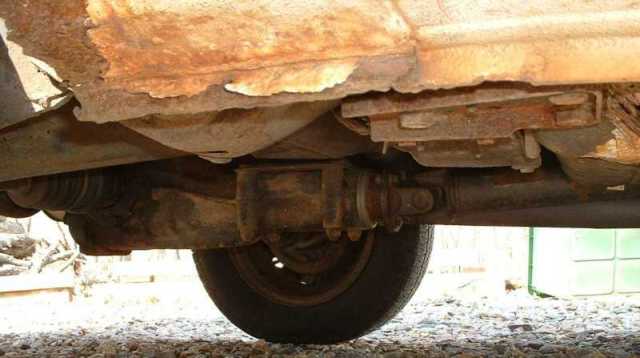
(click picture to see big version) Check the angle that the driveshaft meets the U joint at the diff. The diff should be about horizontal along it bottom. The driveshaft goes up at a slight angle. Dave
-
What does it do with engine brakeing vs acceleration? I had the pinion bearings fail in a 4WD wagon - If you let it coast or engine brake it made horrific noises. I Drove it home by always keeping a little gas to it while stopping. Took it apart, the pinion was moving forward into the differential carrier but while under acceleration or up hill, the forces held the pinion back, so it ran ok. There were chunks of metal carved off of the carrier in the bottom of the case. Dave
-
Here is the heavy duty trailer hitch I made: http://users.adelphia.net/~davidtief/hitch.html When I retire this car and move it to the new 87, I'll see if I can come up with a "stress test" before I remove it. It should either rip the rear 1/4 of the car off, or support the whole thing... Dave
-
I know that an 86 Toyota sedan had at least one in it. Whatever carbed sedans they were making around those years should have them. I am pretty sure it was a corolla: http://cgi.ebay.com/ebaymotors/1986-Toyota-Corolla-4-door-sedan-Great-Condition_W0QQitemZ4630668107QQcategoryZ6445QQrdZ1QQcmdZViewItem When I got married, my wife had the Toyota. My 78 Subie was getting to the point of too rotten and started making bad noises from the transmission. We bought a 2 year old 90 Loyale. The A/C controls annoyed me because the selector forces you to draw in fresh air unless you choose A/C MAX. I saw the nice little solenoids in the Toyota, bought one from a dealer. Connected it to a switch on the dash, mounted on hte blanks to the left of the speedo. The solenoid selects fresh air / recirculated air. When the EGR solenoid failed I thought of the Toyota one that was still working. That's when I went to the junkyard. Not long after that, we sold the Toyota - we could never get it to run right - and bought the 86 Subie. I eventually sold the Toyota manual also. Dave
-
Old Subaru with leaky cam seals = burned oil smell. My 92 used to leak so much oil that the smoke hazed up the 3 car garage. The oil sticks to the aluminum, flows back until it drips on the headers. Oil leaks also hep slow down body / frame rot. I have not seen oil get on the timing belts. I have been running EA82 Subarus since the late 80s. Somewhere along the line, I found out that Subaru chaged the service interval on timing belts to 40,000 miles. I never had one last past 60K. When replacing timing belts, be sure to check the 2 tensioner bearings and the idler bearing. The seals get hardened by the heat of the engine. Also, there is an o ring that seals the aluminum piece that holds the cam seal in place, and it gets hardened also. Dave
-
I guess I'll have to make another addition to my web page.... give me a day or 2. Dave
-
All of my EA82 wagons have / had them. 86, 88x2, 90, 92. I have never noticed one without them. Dave
-
92 Loyale $150.00 Tbelts, water pump. Gasket set to stop oil leaks. Exhaust 2 fenders (originals rotted, remainder of body not bad yet) All other parts (not many) came from my stash of parts from 3 parts cars. The question is how much are you going to spend VS how long will it last? I will replace / repair anything until the body rot gets too far gone. I really do not enjoy body work. I always figure $1K over purchase price of a used car for misc repairs. The newest car I ever buy is 2 years old, and those are only really for my wife. She has a thing about "new & shiny". Dave
-
Yes, slightly faster RPM increase. Similar, more dramatic effect by lightening the flywheel. Same would be true of lighter rims. Another, probably more noticeable modification would be an alternator unloader. Might be a good thing to make custom diameters for the engine swaps where the normal cruise RPM of the new engine would be different than it's original drivetrain. Dave
-
I made a web page with my solution to the always failing Subaru EGR & Evaporative Emissions solenoids: http://users.adelphia.net/~davidtief/solenoid.html Dave
-
Also, check carefully for rust on the tubing that the rear diff mount to. My 88 rusted to the point that the tube started to twist, lowering the front of the diff, causing it to hit the driveshaft. Initially, it was intermittant, only under certain loading from 4WD. The first time I got under to find the noise, I could not see any way the driveshaft could hit the exhaust where the shiny marks were. Nothing would move far enough by pushing and shoving. A few months later, it was no longer intermittant. Dave
-
I use the CFS 2 row turbo in all of my non turbo wagons - it is rated for more BTUs than the single row, and the cooling system is marginal on these cars anyway. I have to cut a couple of pieces of sheet metal in the front so it will fit the non turbo cars. I also change the A/C condenser brackets to block less air at the same time. Depending on the studs on the engine driven fan, I have had to shorten them. Dave
-
I'll see if I can get a couple of good pics in the next day or 2. I never had part numbers - I went to a local junkyard where they let me go looking at the Toyotas. There were 2-5 of the solenoids under the hood on them. The donors were similar age to the Subies. Take some of the Toyota vacuume line, and the little air filters that are on them. The wiring is simple. Cut the connector off of the dead Subaru part, keeping the wire on the connector end. Cut the connector off of the Toyota part, keeping the wire on the solenoid. Each has 2 wires, connect one to one, other to other, doesn't matter which. I use heat shrink with a little RTV red smeared over the joint first to seal it. I'll have to check the plumbing part, since the ports are slightly different from the Subaru ones. You need a good Subaru solenoid to figure it out. just have to trace the 2 air paths with the coil energised, and not energised. Dave
-
I fix stripped holes with the helicoils. The kit comes with a tap and i think the drill also - or at leat the recomended size. Car parts stores like NAPA also have individual taps for sale, a lot of the ones I have came with recomended drill size info. http://WWW.mscdirect.com has all kinds of tools, bits, taps, also. Get some anti seize compound. Put it on bolts before re assembly. I never had one stick a second time. Even the timing belt covers. Be careful on tourqueing, sometimes it lets the bolts turn too easily while tightening, makeing the bolt tension higher than desired. Dave
-
First, do what the other replies suggest to verify the codes. The purge solenoid looks like the EGR solenoid. It is in the same area on the passenger side intake manifold. It controls when the evaporative emmissions system sucks the gasoline fumes previously captured by the charcoal cannister into the intake. I replace these with Toyota or Honda valves, since they don't fail like the Subaru ones. You have to make minor bracket mods and wire splices to the alien parts. Dave
-
All the subies I have owned since '76 had good dip sticks - I f you leave the car sitting overnight, you pull the stick and get a good reading. Except our 01 Forrester. Oil is always up past the full mark, have to wipe it, then insert & remove, and get a trickey to read level. Is this "normal"? Thank you, Dave