All Activity
- Past hour
-
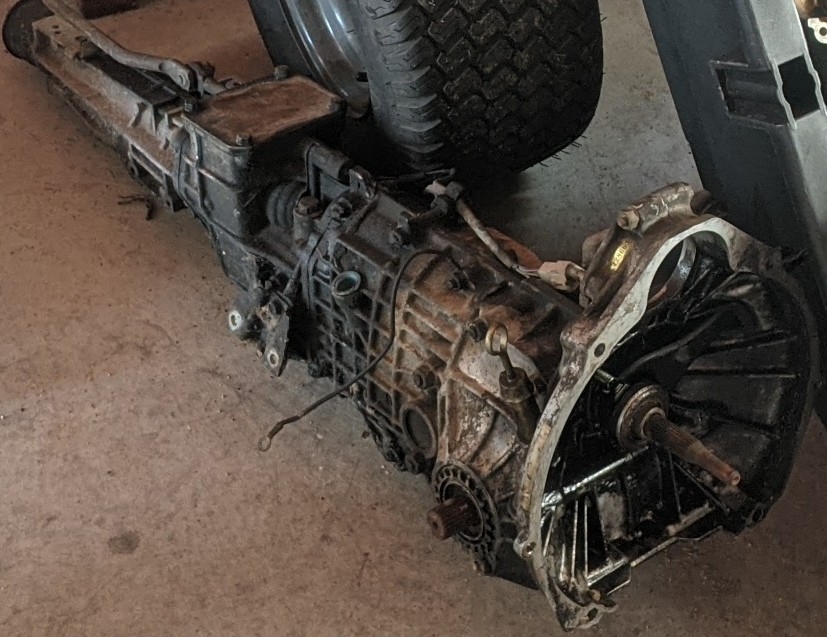
I recently acquired this transmission as part of a parts lot. I knew it was older than my scope of interest due to the centrally mounted starter. Does anyone know what this transmission is, what engine it mated to, year range, etc? I believe it's a 4 speed single range due to no external selector shaft exiting the front of the transfer case. P.S. My apologies for the grainy image quality. I had to crop the photo way down to be able to reduce the file size. :]
- Today
-
Yep, will we ever learn? One wonders doesn't one! Bill Rigsby - Florissant, CO - 8,213 feet 1982 Brat
-
The first thoughts that come to my mind are injector, fuel pressure regulator, or the IAC valve. While I don't think the IAC is the main culprit, those valves can be very tricky. I've heard (and this is conjecture) that they can be bad but still test good. Because they are a heater, their resistance changes between cold and warm. So they could test okay cold but are out of spec when warm. Again, this is conjecture so don't quote me on this, but the IAC isn't just for idle. Allegedly it'll also "catch" to maintain air fuel mixture when the throttle snaps shut. It essentially acts as a buffer to compensate for a rapid change in air entering the intake. I've been chasing a mixture issue myself for months as well so I feel your pain. But if I had to guess, I'd say it's fuel delivery related OR some vacuum issue (be thankful you don't have to mess with the vacuum madness that is the factory carb setup). :]
-
I definitely don't have any pinging. I do have some dieseling when turning off the car but we made a slight adjustment the other day and it improved some. I still have a bit of a high idle. I do feel the car has way more power when the secondary kicks in. Tach is definitely jumping around a slight amount. I did pull the distributor cap and one of the spark plugs when I got it home and all that looked good to me.
-
Wish you were closer. I'd pick those up just to have. I'm with you. I sold my 83 BRAT in 08 when I was needing something to commute to college. Now, full circle, I'm back in an EA81 doing the same crap all over again.
-
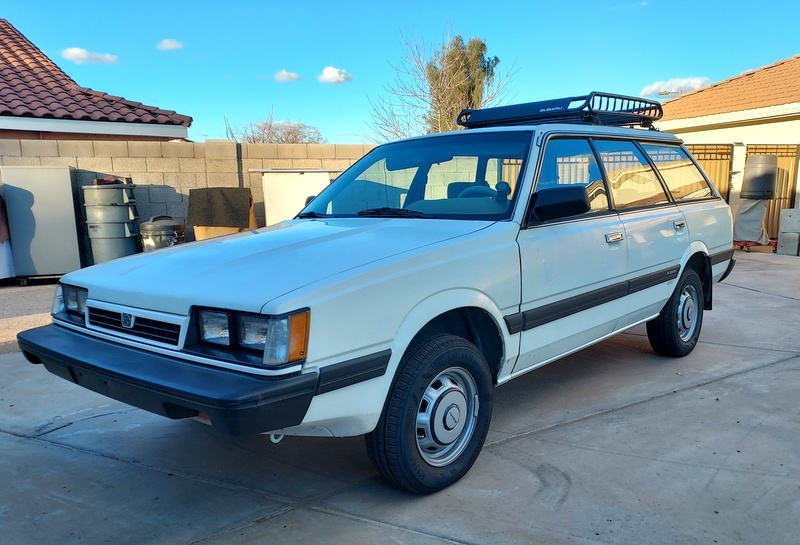
I've been working on this problem on and off for almost 4 months and starting to wonder if I am overlooking something obvious because I've been at it too long. It was my daily driver up until this engine issue and honestly, I would rather drive this to work than my 2003 WRX so as much as I hate to ask, I need some help to review my problem. My engine had been running like a champ for well over 2 years since I originally bought this wagon home and repaired a leaking head gasket. I put a least 50 miles on it daily with both freeway and city driving. About 4 months ago, it fired right up as always but then stumbled for a bit and died. What? It has never, ever, done that since the first day I fired up after the rebuild and that was probably 20,000 miles ago. It is the SPFI engine so I never touch the gas pedal when starting. It will restart instantly over and over and runs great for the first 2-3 seconds before the stumbling begins and barely stays running or dies. Sometimes, it will continue to idle very poorly in the stumbling condition for 3-5 minutes, right on the edge of dying. If I step on the gas, it will instantly increase engine speed very quickly and strongly until the desired RPM is reached, but then it begins to stumble again as soon as the RPM is held steady. If I had to guess, I would say it seems to be running very rich during the stumbling phases but I don’t know for sure. It runs fine as long as the engine is increasing in RPM. If I hold the throttle steady at any set RPM, it begins to stumble. I can race the engine over and over by blipping the throttle over and over and it seems okay until I try to let it idle or hold a steady throttle position. I checked and cleaned the MAF. No change. I then replaced the MAF with a known good unit just in case. No change. The MAF was not dirty and I do get a rising and falling voltage signal from the sensor when I back-probe the signal wire at the connector. Wiring harness checks out per the shop manual procedures. I'm working from an 1989 dealer repair manual but pretty sure it's the same for my 87. I don’t have a check engine light and the only code I get from the little red LED hidden inside the ECU is the 5 or 6 short repeating flashes indicating the ECU build series. The 2-wire temp sensor used by the ECU is fairly new and reads the proper resistance range for the engine temp. The IAC seems fine. I took it apart, cleaned it and confirmed it opens and closes when power is applied. When it is closed, it is sealed tightly and flows air easily when it is open. It is a 100% open or 100% shut, although I don’t know if it is modulated by a PWM signal from the ECU. It seems to be active all the time during my testing. It is not a bi-metal heated type valve that closes slowly over a 5-6 minute period after a cold start. If I unplug the IAC connector the engine won’t run at all so it seems to need that bypass air for sure, at least when cold. I thought that maybe I had a large vacuum leak but a smoke machine only showed a very tiny amount of leakage around the throttle shaft at the TPS. The TPS is set correctly with the idle contact switch inside closing only at idle per the FSM. The resistance of the TPS matches the factory manual for all positions. The resistance changes are smooth throughout the rotation from idle to full throttle. Fuel is fresh, filters are clean. Constant 23 PSI measured under the hood with ample flow when I open the line for a test. What causes an SPFI EA82 engine to start perfectly with no issues but then immediately run poorly, except when under acceleration? The fact that the engine starts normally at every attempt but seems to only run well when accelerating makes me think of an ECU that is going in and out of a closed loop/open loop program but I know very little about that possibility with this OBD1 technology. I recently tried a new Bosch 1-wire O2 sensor but it made no difference. Figured that was a long shot but it was cheap and easy to change. At this point, I’m wondering if I can’t see the forest for the trees. Am I missing something obvious? She's to pretty to just be sitting in my driveway.
-
Bar the engine over until the timing marks are visible in the access hole on the bellhousing, wire brush both the flywheel and the pointer, then use a white paint marker to mark the 8 degrees BTDC line. Set timing at idle with the vacuum hose(s) to the distributor unplugged. Set idle speed before setting timing. If idle speed changes while setting timing, re-adjust, re-set timing, etc. But, a miss isn't usually timing. Too advanced timing causes pinging before it causes misses, and too retarded timing causes power loss without misses. Check plugs, wires, cap, rotor in good condition, then look at mixture. A 'scope on the primary is also a quick check for ignition misses.
-
The one with the big shoulder was in the left rear. Not sure if we found the same thing on my Impreza.
- Yesterday
-
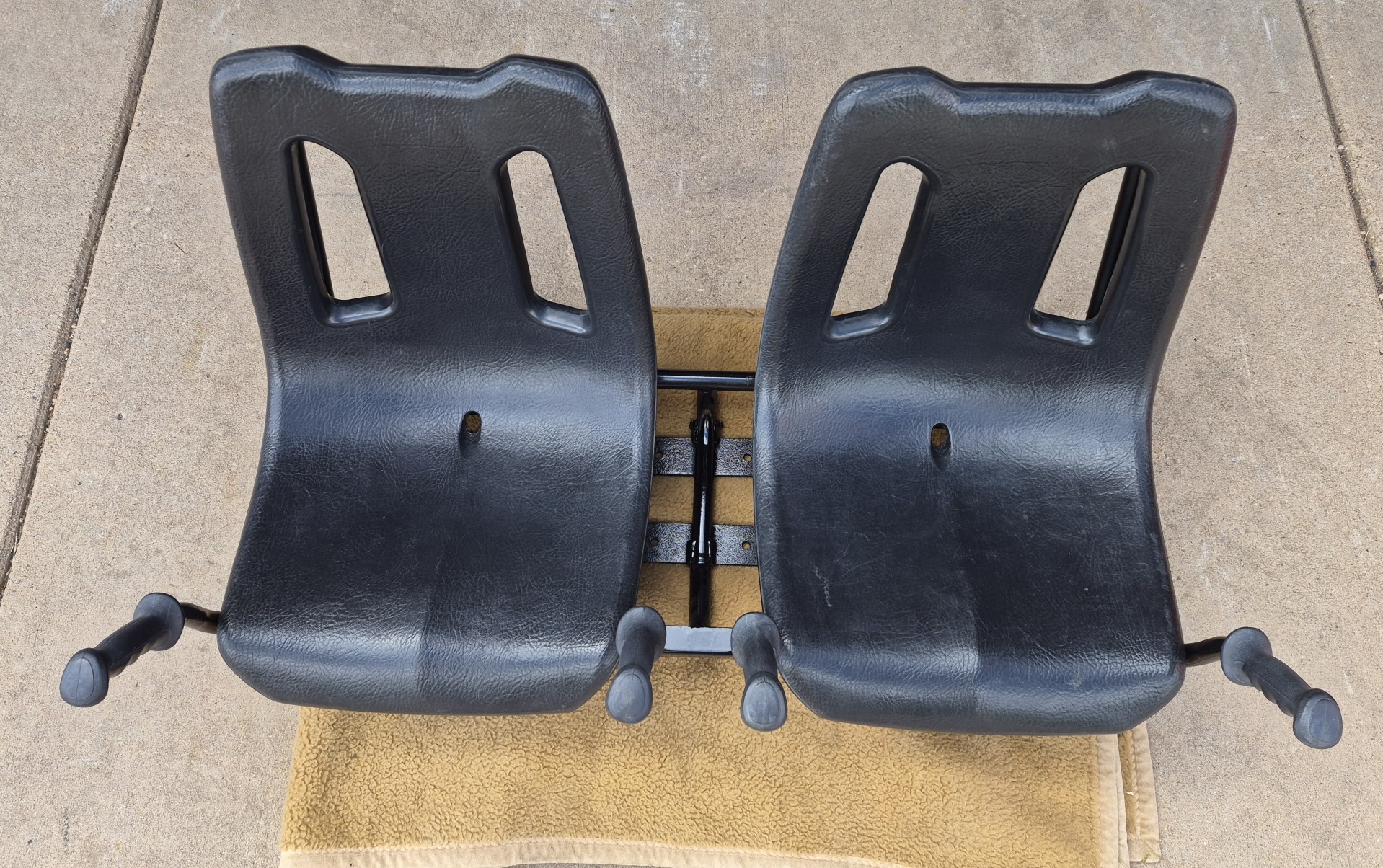
Thank you, yes I should have never sold the one I had when I first moved to Colorado in the late 90s, been searching ever since for something worthwhile, meaning not a rust bucket. Now I can sell the jump seats I I have had in the shop for several years in case I found one that didn't come with those.
-
Strange, I just got digging into the catalog. Yea, one of the rear subframe bolts is different. It's drawn in the LR position. But the bushings are all the same. 🤷♂️
-
Next on the agenda is figuring out my idle/mixture issues. I still seem to have a good little miss while driving. I've never used a timing light so I probably need to get one of those on order and con my father-in-law into seeing if he remembers how to use one. I know my distributor has been messed with at one time because it's got the wrong bolt in it. @bushytails , any advice?
-
Congrats! I saw that on Cars and Bids the other day.
-
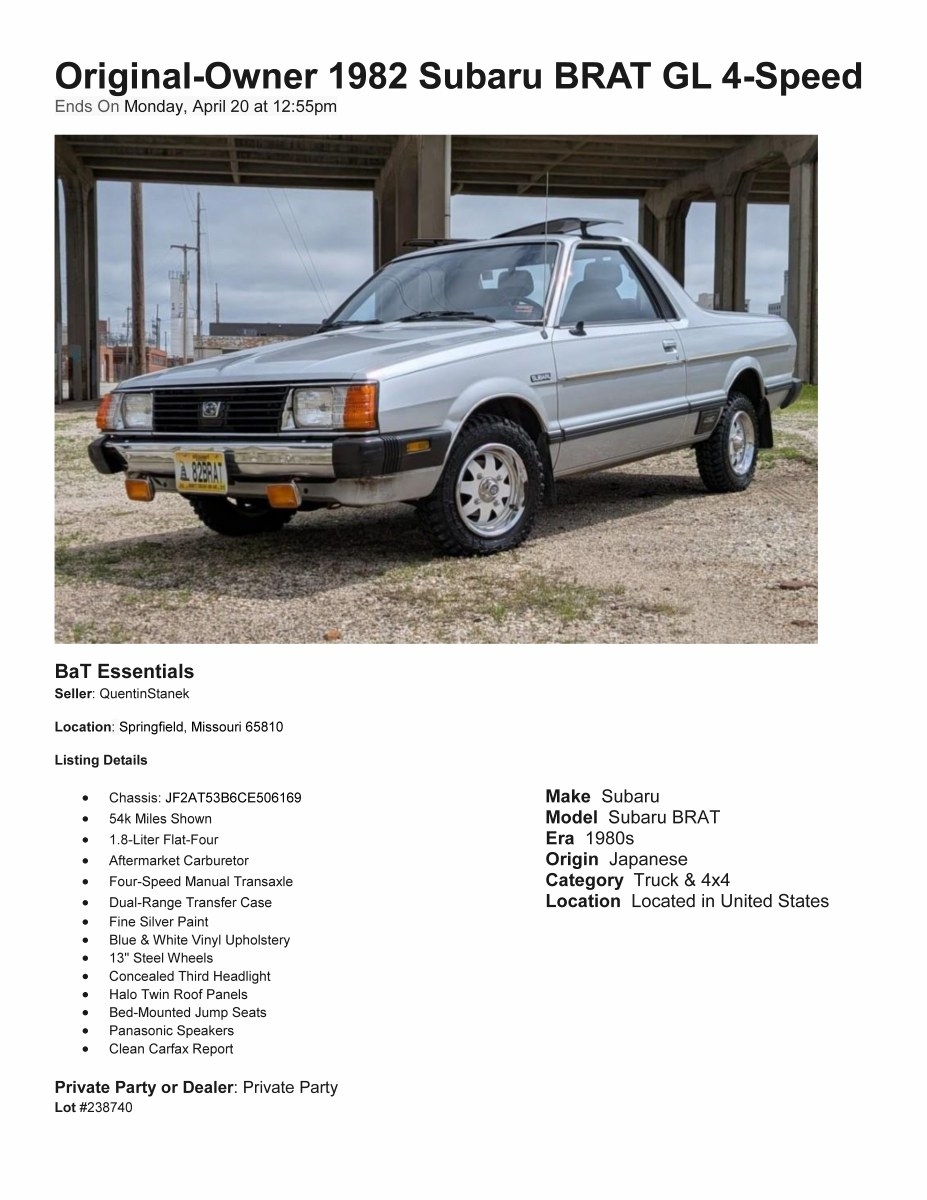
Long time since I have been here, sold my 99 Impreza years ago. Just scored a Brat on BaT yesterday, I know it is a long shot, but I am going to need to find a perfect front bumper! Any leads would be appreciated. Bill Rigsby - Florissant, CO - 8,213 feet 1982 Brat
- Last week
-
Coworker gave me a set of skis. I also have a new fuel filter to install at some point.
-
You only find plutonium in select delorean cats, not subarus...
-
We thought we had prerun the rear diff and suspension swap on Bs Forester as best we could so we did that last weekend. Definitely seemed like it was time to swap the rear diff, it has been making noise (pinion bearing?) for a couple years now and there was more debris on the magnetic drain plug than usual. Everything went smoothly until we got to the rear diff bushings. They weren't completely shot but they almost certainly have 300k miles and 25 years on them and this would be the time to replace them. We tried the hollow hydraulic cylinder again but for some reason it didn't have as much stroke as it should and we couldn't see an easy way to bleed it or add oil. Then the threaded rod we were using snapped. At this point B suggested just removing the subframe. He was able to break loose all four bolts but then three of the four nuts started spinning inside the frame. So we hole sawed in from the top to get at those. That wasn't too bad but we cut into a vent line for the fuel tank so I replaced/rerouted that one later. One of the subframe bolts had a big shoulder on it that fit the subframe bushings fairly well, the other three were just 12mm. We used new bolts, anti seize, sleeves for all four bolts to fit the bushings better, washers and nylocks on the top when we put it back in. Pressed the bushings out and the new ones back in. Even in the 20 ton press removing the bushings took some effort. Reassembly went fairly smooth. B said the drive home was mostly good, pulling to the left which slowly seemed to improve. We were barely able to assemble the brakes with new pads on his worn front rotors we used in the rear, one of them was definitely dragging some. The next week he said everything was working alright and then suddenly on Wednesday it wouldn't rev over about 3000RPM, even in neutral. He tried a different fuel pump, the flow and pressure seemed good. Replaced air filter, plugs and wires, and tried a couple different coil packs, no improvement. He drove it to my house and we did some more troubleshooting. If anything the OBDII indicated it was running rich when it would stall and everything else seemed to be working properly (MAP, TPS, etc). Slammo suggested maybe the cats were plugged so we unbolted those. The front cat was empty. Fired it back up and revved out fine. Figured the plutonium from the front cat had plugged the rear cat so we tried backflushing it with compressed air which did nothing. Then tried backflushing it with the garden hose nozzle, not a drop came out the other end. B's hypothesis is that when we got a bunch of rain this week the moisture in the exhaust turned the plutonium dust into mud and completely sealed off the rear cat. He cut it out and welded a piece of tubing in its place and it runs great now. We also bled his rear brakes and replaced his HVAC fan switch with one that works better and did some other little things. In the meantime I changed the oil, oil filter, and air filter and charged up the AC on the Impreza and did a few other things. It's been awhile since I changed the air filter. That picture makes it look a lot worse than it was, there was just a ring of leaves at the end, filter itself wasn't too bad but I put in a new one. It has been running consistently cool now since the lower temp thermostat and hose rerouting and I think I've fixed a few small coolant leaks.
-
If memory serves me, and it's not as good as it once was, you need to remove the vac module and three screws you mentioned -- the one under the rotor and the two inside the housing by the clips that hold the distributor cap in place. Dangerous amateur tip: you can put a slotted screwdriver tip under the reluctor and use the edge of the housing as a fulcrum to apply slight leverage to help unstick the breaker plate assembly.
-
Numbchux replied to sirtokesalot's topic in 1990 to Present Legacy, Impreza, Outback, Forester, Baja, WRX&WrxSTI, SVXYes. 4th gens were available with the 2UZ 4.7l. Mine is a 1st gen, though. I have a 4.0 1UZ in it. Install is far from complete, but it runs and drives (no cooling system, so very briefly).
-
moosens replied to sirtokesalot's topic in 1990 to Present Legacy, Impreza, Outback, Forester, Baja, WRX&WrxSTI, SVXCool, thanks. Yeah Boyd’s I’ve dealt with when using a friend’s place in Norwich. But that’s a haul. Not sure what Johnny’s in Thomaston is up to lately. I think they have a new owner for a few years. Used to be ok, he’d let you walk and pick. Milford Auto Recyclers is messy but those guys can be fair too and let you walk through. I’ve picked there years ago but I’m not sure if they’re letting you pick. But they’re cool guys there.
-
el_freddo replied to sirtokesalot's topic in 1990 to Present Legacy, Impreza, Outback, Forester, Baja, WRX&WrxSTI, SVXYou guys got a v8 4Runner as standard, or is that an engine conversion? We got the v6 or the diesel option, definitely no v8!
-
Rallycross is a good time, and depending on the surface and track layout can be a real strain on the cooling system. The last time I raced one was in a fully rally-prepped STi, and I had to drive it down the road 1/4 mile and back to let it cool off after every run.
-
Numbchux replied to sirtokesalot's topic in 1990 to Present Legacy, Impreza, Outback, Forester, Baja, WRX&WrxSTI, SVXI know you've already done it. But when I scrap cars, I cut out the radiator support. Then the engine and transmission come out easy. I even made the upper radiator support bolt-in on my 4Runner during the engine swap. I had the V8, 4-speed auto and transfer case in and out of it several times, but left it all as an assembly.
- Earlier
-
I have discovered that much of my gradual performance degradation is due to excessive slop in my Hitachi distributor's upper shaft. Getting adventurous and hoping to save my little funds, I have three Hitachis. The faulty one in the car, the one that it replaced that needs cleaning and taken apart, and a third, a used one that I want to clean. How does one remove the "breaker plate" to get to the centrifugal weights? I've pulled the screw from the upper shaft, the two "breaker plate" screws, and the vacuum module, but stuck there as "breaker plate" is immovable.
-
lmdew replied to 19Red_wgn98's topic in 1990 to Present Legacy, Impreza, Outback, Forester, Baja, WRX&WrxSTI, SVXProper torque! The bracket can be replaced if needed.
-
19Red_wgn98 replied to 19Red_wgn98's topic in 1990 to Present Legacy, Impreza, Outback, Forester, Baja, WRX&WrxSTI, SVXI have replaced the belt not the pulleys or tensioner. Sounds like a stupid thought process, but my belt literally broke some of the teeth off as it was running. Idk how I didn't have a blown engine since it’s the revision of the Ej22 (Piston design change in 97 and brought up compression). Didn’t have the money to replace tensioner or pulleys, but they were not shot yet. I’m going to go back to them because my cam seals are leaking pretty bad so the timing belt has to come off again. One thing I’m a bit concerned about is the tensioner bolt stripping out being it goes into aluminum.