idosubaru
Members
-
Joined
-
Last visited
Everything posted by idosubaru
-
idosubaru replied to idosubaru's topic in 1990 to Present Legacy, Impreza, Outback, Forester, Baja, WRX&WrxSTI, SVXcopy. i was thinking it would share more parts with something.
-
idosubaru replied to Ronf42's topic in 1990 to Present Legacy, Impreza, Outback, Forester, Baja, WRX&WrxSTI, SVXHas it been properly burped? Could be air in the system. Refill with nose up, use bleeder screw if it has one (passengers side top of rad), top off radiator after driving...etc. That's probably the issue. How long since the headgasket job and how many miles? Are the fans coming on? What brand head gaskets? Was the required Subaru Coolant Conditioner added after the work?
-
Wow, difficult to hear. Thoughts to the family and friends. Thanks qman for sharing.
-
is it engine and transmission only? body parts are tribeca only? suspension?
-
+1. you'd be like "i think it's got a little more power". most frankenmotor engines involve Phase I DOHC blocks, you're talking about Phase II SOHC block. it's not as advantageous that way. you can't easily use 2.2 heads, not the traditional "frankenmotor heads" anyway. those aren't a direct swap. different intake manifold so you'd have to swap your existing intake manifold wiring harness onto the 2.2 intake manifold but then it still wouldn't idle and perform correctly due to idle and MAP/MAF changes. you can use 99-2001 EJ22 heads, your 2.5 intake manifold will bolt right to them so there's no wiring change at all, but you'd need the exhaust manifold to do it as well.
-
That's precisely his point. If EGR controls NOX...then it can't possibly be the cause of your HC and Co failing. Pretty sure you'll find swapping a non-EGR vehicle to EGR challenging and not as simple as you'd hope.
-
idosubaru replied to Pgh_Scoob's topic in 1990 to Present Legacy, Impreza, Outback, Forester, Baja, WRX&WrxSTI, SVXA front seal or valve cover gaskets are most likely. Good luck!
-
idosubaru replied to freekraz's topic in 1990 to Present Legacy, Impreza, Outback, Forester, Baja, WRX&WrxSTI, SVXYours is a completely different animal than his. The 2005's have a bolt on hub/bearing assembly rather than your pressed in style. His comes pre-lubricated, you can't grease them like you can your earlier model. Multiple bearing failures on your 99 is often a problematic hub or pressing rather than using a hub tamer - replace hub and/or use a hub tamer tool rather than a press and bearings stop failing.
-
I've seen this before and simply replacing the cap and rotor solved the issue. I've even seen it happen with brand new cap and rotor. Probably just sub-par parts. I'd simply replace them first, unlikely it's anything but something like that which has been seen before. Make sure you get the correct part. I think all EA82 caps/rotors are the same? But what about EA81 - those are probably different and could be confused as they were available until 1988.
-
i've never done the remove-valve-cover method except maybe when already disassembling a motor once or twice. loosening with timing belt still in place is ideal too, it holds a good bit of tension on the sprocket. my friend uses an impact - same idea as a socket and slamming the end of the handle with a hammer rubber strap wrenches are what i typically use http://www.harborfreight.com/media/catalog/product/cache/1/image/9df78eab33525d08d6e5fb8d27136e95/i/m/image_21782.jpg
-
idosubaru replied to Motorhead16's topic in 1990 to Present Legacy, Impreza, Outback, Forester, Baja, WRX&WrxSTI, SVXthe 98 engine will bolt to the 99 transmission - it'll bolt to ANY EJ, EG, or EZ engine from 1990 - 2010 actually, no big deal there. 1998's have 8 bolt bellhousings anyway, but even if it's a 4 like 1997 and earlier it'll still bolt up just fine. The 2.5 engines have significant headgasket issues - be informed and choose wisely. But they do not require swapping ECU or any wiring as long as they're 2000+ EJ25's (and 99 Forester/Impreza RS). Bolt the EJ25 engine in place, bolt the Ej22 intake manifold to it and it's the "same" engine as far as the wiring/ECU is concerned. It is pointless to swap EJ ECU's. EJ non-turbo heads are extremely robust, i'd reuse heads unless there's evidence of the timing covers or knock sensor melting or really bad overheating like until the point of engine shutting down on it's own or something. So i understand wanting to move on from those. But if you were still deciding you can bolt 99 heads to the 98 engine block and then you'd be using all the Phase II intake manifold, etc.
-
idosubaru replied to freekraz's topic in 1990 to Present Legacy, Impreza, Outback, Forester, Baja, WRX&WrxSTI, SVXBearings would have been replaced for free by Subaru - 2005's had a 100,000 mile extended rear wheel bearing warranty. Does it still have under 100,000 miles? Call subaru. Get higher quality bearings. I would assume, but dont' know for sure, Subaru has refined the bearings. The shop implicitly said the same thing about low quality bearings: Probably the other side that still has the same "low quality" bearings from the first two installs before they "switched brands".
-
idosubaru replied to Pgh_Scoob's topic in 1990 to Present Legacy, Impreza, Outback, Forester, Baja, WRX&WrxSTI, SVXit's almost certainly AWD, but check first. most FWD's are 1995 and earlier, by 1996 they were very uncommon.
-
idosubaru replied to RegularDude's topic in 1990 to Present Legacy, Impreza, Outback, Forester, Baja, WRX&WrxSTI, SVXthe best engine Subaru ever made is the 1990-1998 EJ22. if you want low cost engine that REALLY EASY to drive 100,000 miles without much cost/maintenance then get one of those. of course in my area they're very hard to come by in good condition without rust. but if you can find one, they're amazing and you can get them cheap and run them forever. very few issues and super-practical. given your situation you might try and land in one of those and then wait a year or two to see where you're at for something else. 1996 and earlier are non-interference as well. doesn't really matter if you replace the complete timing belt kit - belt, tensioner, pulleys.
-
idosubaru replied to Pgh_Scoob's topic in 1990 to Present Legacy, Impreza, Outback, Forester, Baja, WRX&WrxSTI, SVXYou said it "looked like headgaskets" - separator plates generally aren't that far forward - though you don't say exactly what part of headgaskets but the "rear" headgasket leaks look like lots of things - valve covers, heads, separator - so i'm assuming it's fruther forward. if it's at all wet under the timing covers - it's the crank or cam seals, easily replaced wtih timing belt job. they can leak a lot and be worrisome if oil level gets too low. the Ej25 headgasket and battery connection is silly in my book: 1. EJ25's have had headgasket issues right off the dealer lot when brand new - they were being replaced under warranty with brand new batteries and cables. people just getting into the Subaru game in the past 10 years don't know this about 15+ year old vehicles, making it easy to propagate something like that. 2. EJ18's, EG33's, EJ22's also have batteries, cables, and poor connections - they don't have headgasket issues. Sure - multiple things exacerbate a weakness, but I'd call it a very low percentage avenue to explore as a "root cause" - there's massive quantifiable amounts of evidence to the contrary.
-
idosubaru replied to RegularDude's topic in 1990 to Present Legacy, Impreza, Outback, Forester, Baja, WRX&WrxSTI, SVXMaking a non-rushed purchase makes things 100x easier. You *can* get a better deal from private sales. All dealer and used car lots are simply trade-ins and auction vehicles - they know nothing about the vehicle or the most important question to know the answer to for a used car - why the person is getting rid of it? It doesn't take long to find out why someone is getting rid of it. If it looks aged, well warn and not taken care of - move on. If it's pristine, they're outgrowing it because of 4 kids, and he's a doctor just wanting to move on and get rid of the car - buy it. Of course you need to have the personality to talk to, communicate well, and discern. Not everyone's cup of tea. Who is more likely to trade something in...one that caused uneasiness or one that's perfectly running with zero issues? I've got great deals picking a car up in front of a couples house. The last thing a home owning family wants is to sell a vehicle with any hint of issues - they'd just trade it in and not deal with it. I'd look for a rust free 00-04 model. The 05+ command higher prices and offer no more reliability or practicality. From experience the 00-04's are a little more reliable. The tend to leak coolant externally which is easily remedied with a $2.50 bottle of conditioner from Subaru and they don't get bad as quick. You can drive them 50,000+ miles once the headgasket starts leaking. While possible with 05+ models their oil leaks can get worse quicker. It would be a minor increase in reliability - but the point is the higher 05+ price points offer nothing in terms of reliability. Rust makes owning a car a real debacle. Bolts shear off, rear backing plates disintigrate, rear suspension creaks and can't be aligned without torching or carefully cutting bolts out and replace the inner arm and bolt, exhaust is hard to work on and expensive, caliper pins seize, all the hose clamps have to be cut off to be removed, radiator shroud bolts, radiator hold down bolts, washer fluid tank bolts, the air intake bolts on the front crossmember....all those bolts routinely shear off - multiple of those are all sheared off on all of my vehicles except the one i had shipped from CA. All that to say - if you're adventurous - by from down south and you'll get a lot more miles and cheaper maintenance doing stuff yourself.
-
idosubaru replied to Motorhead16's topic in 1990 to Present Legacy, Impreza, Outback, Forester, Baja, WRX&WrxSTI, SVXthe 8 bolt bellhousing doesn't matter - you can bolt 4 and 8 bolt stuff together - the 4 holes will line up, leave the rest empty. it doesn't matter. the FWD trans may work in your vehicle. what is wrong with the existing engine/vehicle? Direct plug and play engines are: 1999 Legacy 2.2 1999-2001 Impreza 2.2 If you grab a dual port exhaust manifold (very easy to get) you can also use: 1999 Forester and Impreza RS 2.5 liters 2000 - 2004 ALL 2.5 liter engines. Can even use 2005+ but you probably won't go that route anyway. Don't convert it to automatic - the TCU, gearing, wiring would be atrocious to deal with. Unless you were trying to be uber-cheap - install an automatic and don't do anything at all - no TCU, no wiring harness. it'll run in mechanical mode - 3rd gear locked 4WD. you install a switch into the Duty C circuit - one wire - so you can toggle between FWD and 4WD and the car is perfectly drivable, a bit slow on takes off in 3rd gear. i've done it.
-
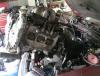
installed this H6 EZ30 and auto trans together last night, very easy. it's nice installing all the bellhousing bolts out of the vehicle, no effort jacking up/lining up trans above crossmember, and took no extra time sliding it in this way.
-
idosubaru replied to amyksh's topic in 1990 to Present Legacy, Impreza, Outback, Forester, Baja, WRX&WrxSTI, SVXyou've given us as little information as possible to go on in terms of driving it - it's kind of like me saying "my leg is cut" - can i run on it? 1. if it's been cut for 3 months, infected, gangrene, and arteries are damaged - then don't walk any more than to the vehicle to take you to the ER. 2. if it's a paper cut you did yesterday - go run a marathon generally they don't just let loose with no prior symptoms and can be driven somewhat. 1. how long has it been having any symptoms (noise/vibration)? 2. how bad is it right now - the noise/vibration? 3. how long is your drive/commute? If they fail it's really bad news as depending which you joint it is - the furthest one up front can swing around and take out the rear housing on the transmission. they certainly don't want that to happen, the customer would be really excited about Subaru not protecting them from that.
-
idosubaru replied to amyksh's topic in 1990 to Present Legacy, Impreza, Outback, Forester, Baja, WRX&WrxSTI, SVXThey are replaceable - old mother Subaru just won't do it. $20 part and 30 minutes and they want you to pay $1,000+ to repair it LMAO!!!!! Gotta love the incompetency of dealers. Ujoints are $20 - $40 (Rockford is the $40 ones). Like John said, any automotive machine shop can install it. ***Note - All Subaru dealers have a machine shop they use for resurfacing flywheels and resurfacing/repairing/testing engine heads. So your Subaru has a direct connection to a place that can and will do this. So either: 1. See if Subaru will allow their normal machine shop they use to install the ujoint or 2. take the driveshaft to a (even the same one Subaru uses) automotive machine shop and have them install the ujoint and Subaru installs the finished product. you can simply ask Subaru which shop they use if you need to find one. * the shop will likely want you to supply the ujoint since it's an obscure repair/part. or 3. install a used driveshaft. easy to replace and they fail rarely enough that this is generally a decent option, ujoints can be tested for lumpiness if they're like new or not. hopefully the yard/shop is honest or tests that since you're not there to discern. here's a link that has the part number he mentioned in the store above - i looked since i was curious of price, they have that TUS part number he listed above for $20: http://theujointstore.com/staked-in-replacement-ujoints.html
-
idosubaru replied to idosubaru's topic in 1990 to Present Legacy, Impreza, Outback, Forester, Baja, WRX&WrxSTI, SVXlooked normal, valve train rotated normal, and seemed like same clearance when pressing to remove shims. engine has zero issues, has run flawlessly for the past 100,000 miles i've owned it. so i'm guessing it's all good, but i didn't specifically check.
-
idosubaru replied to idosubaru's topic in 1990 to Present Legacy, Impreza, Outback, Forester, Baja, WRX&WrxSTI, SVXthat's a good call to check. smallest available is 2.00mm in increments of 0.02mm thereafter up to 2.81mm. i ground this one down from 2.42 to 2.20mm. the others were 2.32mm, this one was a fatty.
-
idosubaru replied to Grey47's topic in 1990 to Present Legacy, Impreza, Outback, Forester, Baja, WRX&WrxSTI, SVXuse a **wired** RF transmitter - don't use the wireless ones, those are the ones everyone complains about. just for example: http://www.amazon.com/iSimple-IS31-Antenna-Modulator-Aftermarket/dp/B002U5XPBE# antenna plugs directly into box and the box plugs into the back of your existing stereo. simple and much better than the wireless transmitter types. you typically install a button to turn it on - if you don't really use the stereo - just wire it to always be on via the fuse box with something that's powered ignition-on and then have a button tucked away somewhere to turn it off if need be. i think i have to turn mine off to listen to the radio for instance as it'll overpower it, but not sure they're all like that and i haven't used mine in awhile. if she uses a garage door - get a rear view mirror with compass and homelink. it'll have a few buttons you can program to open garage doors, turn on lights, anything powered via remote.
-
idosubaru replied to idosubaru's topic in 1990 to Present Legacy, Impreza, Outback, Forester, Baja, WRX&WrxSTI, SVX220,000 miles - all valves had decent clearance except this one valve. The shim of the tight valve was 2.42 mm and another was 2.32. Swapped shims and the 2.42 was too big and would always be tight. I ground the bucket side of the shim from 2.42 to 2.20 mm and clearance was 0.008". Was that shim simply a mistake, too big from the factory?
-
idosubaru replied to RegularDude's topic in 1990 to Present Legacy, Impreza, Outback, Forester, Baja, WRX&WrxSTI, SVXIt's a good 100,000 mile candidate if: 1. the exhaust and other stuff isn't terribly rusty, that'll get expensive quick. 2. the heads were resurfaced 3. quality head gaskets were used - Subaru, Cometic, or SixStar - maybe Fel Pro if they were MLS 4. a complete timing belt kit is installed: New tensioner, all 3 pulleys replaced, and new belt. The kits are only $115 on amazon so i imagine he's doing it all if he knows what's doing. 5. Subaru coolant conditioner is added to the coolant - it's required by Subaru for that engine Ideally all fluids are changed - transmission, front differential, brake, power steering if that's all done properly then yes the engine should be good to go.