DaveT
Members
-
Joined
-
Last visited
Everything posted by DaveT
-
DaveT replied to Pauldoug's topic in 1990 to Present Legacy, Impreza, Outback, Forester, Baja, WRX&WrxSTI, SVXLooks like the newer ones are more of a pain to get the air out of than the ea82s.
-
Looking at the sketches in my 86 fsm, the intake and heads look different between spfi and mpfi. Not interchangeable. Passages and bolts won't line up. I've never had a mpfi so I could be missing something. The spfi manifold / head meet with 3 bolts. There is a small odd rectangular coolant passage inboard. One round air passage outboard. The mpfi kind of looks like it has 2 passages for the air. The sketches are not highly detailed.
-
Glad you got a clue to follow. My 86 had a carb, but that was a long time ago.
-
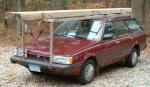
DaveT replied to sirtokesalot's topic in 1990 to Present Legacy, Impreza, Outback, Forester, Baja, WRX&WrxSTI, SVXThis is what I would do. .. piece of 3/4" plywood just a bit larger than the tv. An inch or so of blankets between the ply and the tv, face down. Kinda guessing, but I'd think about 4 straps. Also, note that I have a full 12' aluminium roof rack that I built that can carry 300 to 400 lbs. Yes the car handles funny. Yes go slower and think " I'm driving a big truck" so allow for much longer stopping distances. Avoid higher traffic times and places if possible.
-
I am not certain, but I think the mpfi heads and intake are different?
-
Interesting, I seem to have missed threads about the oem air intake being restricted. I might think about changing that. With the caviot that heavy load at low rpm isn't the greatest thing for these engines. They are made to spin fast. As you consider the ej swap, read the threads about it. You really want a doner car, not just the engine, as you need a lot of the wiring harness. Factory service manuals for both would be good also. And yes it is a big project as are any of the ways to get big (but not as big as ej swap) additional hp. . Small ones , it would seem the intake, and I've seen reports of small improvement from build exhaust 1 or 2 sizes bigger but not bigger than 2" ..
-
DaveT replied to Pauldoug's topic in 1990 to Present Legacy, Impreza, Outback, Forester, Baja, WRX&WrxSTI, SVX+1 to keeping a close watch on the coolant & air level in the upper hose.
-
The original air intake was pulling from the fender / front , not the heated air over the engine, I'm not sure you are getting "colder" air this way. From reading many threads on here, there are not a lot of inexpensive or simple ways to get a lot more power from this engine. There are expensive and complicated ways to get some more power, some with the additional cost of lower reliability. From what I understand of those discussions, most of what limits it is the way the intake and exhaust ports are routed, and the size of the valves. An EJ2.2 is something like 40% more horsepower, and still NA, and a very reliable engine.
-
DaveT replied to jseabolt's topic in 1990 to Present Legacy, Impreza, Outback, Forester, Baja, WRX&WrxSTI, SVXThis is why I include a description of how to verify, rather than outright guess. Often, the first description doesn't have enough information. I also usually add how to avoid making the problem worse, so the diagnosis can be made without causing bigger problems.
-
DaveT replied to jseabolt's topic in 1990 to Present Legacy, Impreza, Outback, Forester, Baja, WRX&WrxSTI, SVX"A blown head gasket is the worst case scenario. But no oil mixing in the antifreeze and no antifreeze in the oil. I did not notice any steam coming from the exhaust. Those are three tell tale signs I know , of, of a blown head gasket." This is not typical of Subaru headgasket failures, except for *very* well blown ones. What you describe is a typical failing headgasket. Typically, if the coolant gets low for *any* reason, and the engine runs above normal operating temperature [not necessarily in the red] the headgaskets will be damaged. You may be able to run for a while longer, if you keep the coolant full, refilling before every drive, but it will get worse as time goes by, and worse quicker every time it runs above normal. How to verify damaged headgaskets: fill radiator. fill overflow tank to line. Short drive / run. When cold, squeeze the upper radiator hose sharply, listing for gurgles and the giggle pin. Remember the sounds. Check the level in the tank, add if low. Drive, but no farther than safe return w/o over temp. Repeat this at least a few times. If there are no leaks, there should be less air gurgling each time you check the upper hose, and coolant will be drawn into the system from the tank. If this is not happening, there is either a leak loosing coolant, or the beginning of headgasket failure. When the failure gets bad enough, there will be a steady stream of bubbles in the overflow tank. This check is after the engine achieves normal temp. As it gets worse, it will begin to push the coolant out as well, causing overflow of the tank. I had one over normal temp experience, where the fans didn't run -[ I had forgotten to reconnect them after a timing belt replacement] - the system was full. It survived with no ill effects. No bubbling was involved. Plugged the fans in, all was well.
-
DaveT replied to Shetara's topic in 1990 to Present Legacy, Impreza, Outback, Forester, Baja, WRX&WrxSTI, SVXThe signs of headgasket yout listed above are typical of badly failed headgaskets, not the beginning failure that causes air to continually get injected into the cooling system. The rate can be anything from it takes a week to notice a level change, to can't go 3 miles without pushing coolant out of the overflow. Checking for air in the top hose by sharply squeezing - listen for giggle pin and air gurgles - and the level in the recovery tank. Do this before every drive. If everything is ok, there will be less air each time. If not, something is wrong and needs monitoring and more details to fiagnose.
-
DaveT replied to HASx11's topic in 1990 to Present Legacy, Impreza, Outback, Forester, Baja, WRX&WrxSTI, SVXif the headgasket wasn't bad before, it likely is now. Above normal temp while low on coolant, does not have to get into red to damage the headgaskets.
-
IF you are looking at SPFI 1800 EA82 engines, the block and heads from 87 t0 93 are the same. There were variants of the heads, but it's minor internal stuff that doesn't effect using them. I've swapped engines between 86 and 93, by changing the intake. if I needed to due to harness differences. There are some different connectors used, but all the same sensors / functions.
-
94 should be spfi. Should have that embossed on the big preformed air intake duct that goes over to the MAF air filter box. Older carb models had the air cleaner on top of the carb.
-
DaveT replied to ferox's topic in 1990 to Present Legacy, Impreza, Outback, Forester, Baja, WRX&WrxSTI, SVXI have removed seals from various things as folows: use a pick or other sharp thing and a small hammer to poke / start a small hole in the flat steel part of the seal. Then screw a long pointed sheet metal screw part way into the hole. Pry on the screw to lift the seal out.
-
I have had intake gaskets fail. Both by slow leaking, and crack / fast fail. The new OEM gaskets from a dealer are far better than any original or aftermarket gaskets I have seen. It would not hurt to replace them, simply due to age of the original ones on the engine. To avoid trouble with stuck [and then snapped] intake bolts - run the car to normal operating temp. Park in your work area, and immediately and carefully loosen the 6 bolts. For really sticky ones, turning back and forth slowly creeping towards loosening. Typical intake leak symptoms are coolant disappearing slowly if drawn into the intake. I've seen an external small leak happen, and the small amount of coolant will evaporate off the block with little trace.. Bad enough to cause smoke, you will also be having major overheat due to low coolant problems, which lead to damaged head gaskets. Disappearing coolant, little to no air in upper hose, usually is a small leak somewhere. Level in overflow bottle slowly goes down. CAn happen at water pump, any hose clamp, radiator, gasket. I just had one in a radiator, the heat was drying it before an easily noticeable trace was showing. Damaged headgasket, air in upper hose, eventually slow bubbles progressing to faster and faster bubbles. Level in overflow may go down at first, but eventually more air pushes coolant out with it than can be drawn back in during the cool down cycle. Must be watched to determine what's going on. I don't decide headgasket fail based on 1 or 2 checks. It's can be a week of daily checking the coolant levels / air and for external leaks depending on how bad it is.
-
Look through the threads for common problems. Ask abut stuff you think may be wrong with your car. One of the most important things to take care of is the cooling system. All 7 hoses, no leaking, coolant level always full, no air in the upper hose. Radiator has all of it's tiny fins still attached to the tubes.
-
Oh, yes, air leaks on the intake will cause drivability troubles. It s running leaner than expected by the ecu.
-
It's been running with low coolant. This is not good. That is a lot of air. If everything is correct with the cooling system, the amount of air should gradually reduce as it works it's way out over a handful of drive cycles. If it doesn't , there is something wrong - a slow leak, or the beginning sign of failing head gasket. Monitor the level in both the upper hose (squeeze sharply, listen for gurgles and giggle pin) and overflow before every cold start. If it runs over normal temperature while low on coolant, it will need headgaskets. 80 psi in the cylinder is nothing compared to what happens when the fuel air mix is set off. It will not show up in the coolant until the headgaskets are pretty well blown - I'm guessing, but by then, you won't get more than a mile or 2 before it pushes lots of coolant out the overflow. Smoke in the exhaust and or coolant in the oil only happen with severely blown headgaskets. You are correct to avoid lugging this engine. They are made to turn high rpms, not chug at low rpm. If I am losing speed with wot at 3000rpm, it's downshift time. If the temp Guage has been staying rock solid at the normal position that's good. 3ven more reason to be diligent about keeping the coolant system full while diagnosing. I've had the tiny slow bubbles stream all the way to can't go 3 miles and one with the addition of the coolant in the oil headgasket failures. None caused drivability issues or smoke.
-
IF by air in the coolant, you mean continuous bubbles in the recovery bottle, that means headgasket. Once you have them, the rate will slowly increase, until you can't really go anywhere without overheating. Bad intake gasket/s suck coolant into the intake. Causing white smoke if it's a big enough leak. But it often is not big enough to cause smoke, but over time, cause low coolant. If the engine gets run above normal temperature while low on coolant, the headgaskets will be compromised. How bad and how long you can get away with running them depends on how long and how far above normal operating temperature. Once the headgaskets are compromised, you get the steady bubbles in the coolant.
-
DaveT replied to Pauldoug's topic in 1990 to Present Legacy, Impreza, Outback, Forester, Baja, WRX&WrxSTI, SVXMajor difference between overheat with no bubbles & full coolant due to blocked radiator VS low coolant with overheat and bubbles.
-
DaveT replied to Pauldoug's topic in 1990 to Present Legacy, Impreza, Outback, Forester, Baja, WRX&WrxSTI, SVXBye overheat above, I mean over normal temp, not nesisariy in the red.
-
DaveT replied to Pauldoug's topic in 1990 to Present Legacy, Impreza, Outback, Forester, Baja, WRX&WrxSTI, SVXWith that steady of a stream of bubbles, you don't have long before it will be undriveable. My experience is mostly with ea82 and older engines. Here is the short version. Un noticed leak causes low coolant. Engine runs hotter than normal once, while low on coolant. Replace coolant. Notice slow bubbles. Days, weeks or months later, progresses to fast bubbles. Every overheat while low on coolant accelerates the demise.
-
Can't think of anything grounding related that would make only 1 cylinder missfire. Compression check is in order.
-
DaveT replied to Pauldoug's topic in 1990 to Present Legacy, Impreza, Outback, Forester, Baja, WRX&WrxSTI, SVXPressure test of coolant system won't show up the pinhole headgasket failure. The psi in the cylinder is many times higher than the coolant system pressure. The gas tester thing I have heard many reports that it often does not detect for some reason. The bubbles continueing for a bit after shutdown is no surprise. The pressure takes time to build up, and time to bleed down.