
idosubaru
-
Posts
26993 -
Joined
-
Last visited
-
Days Won
344
Content Type
Profiles
Forums
Gallery
Store
Everything posted by idosubaru
-
1. Subaru 2. Fel Pro permatorque gaskets (these don't require a retorque) i'd avoid the cheap gasket sets. i've seen headgaskets fail and EA82 crank seals be the wrong size (too big). folks have even measured and put pictures online of the differences in sizes. 1. head gaskets 2. intake manifold gaskets from Subaru (flimsy cardboard aftermarkets will leak coolant into the heads) 3. reinforced cam carrier oring (2) from Subaru. do not use a regular oring - has to be metal reinforced. that's the bare necessities, exhaust manifold gaskets are often reusable if they're original OEM and not too degraded/rusted. valve cover, crank seal, oil pump seal, oil pump oring, oil pump gasket, cam seal, cam oring rockauto, amazon
-
well, if i didn't live in the rust belt i could remove it. LOL
-
The best Subaru axle approach: 1. Reboot your original axles with Subaru boots - they last the life of the vehicle, even people with lifted Subaru's. (is yours lifted and seeing severe offroad or racing use?) 2. If axles must be replaced - buy used Subaru OEM axles (green inner cups) and reboot them with Subaru boots 3. FWE axles out of Colorado Those that have have done untold Subaru axles for decades know 3 nearly 100% solutions with no better alternatives available. That being said - those import expert axles look like every other company supplying aftermarket axles. I would expect typical aftermarket axle experience. Those boots do not look good from the pictures - compare them to a new Subaru outer CV boot and you'll see the Subaru boots have more convolutions, and those styles last a very long time while the older style (from the 90's) with fewer convolutions (like on these import expert axles) are not as robust. If you're needing some exceptional performance beyond this here is what I'd recommend: 1. Reuse your axles or get used Subaru OEM axles. Or FWE out of Denver. 2. Reboot them with high grade, offroad company boots that are severe duty. No one does that though since there's no need with the 3 options I outlined above, so you'll have to research and find those companies, get part numbers, sizes, etc. But it's easy enough to do if you're bent on some "higher grade" components.
- 5 replies
-
- 2
-

-
- 3.0 LLbean 2005
- axle
- (and 1 more)
-
i'll bring the tap and die set, i figured it might be hard to find the right thread, sounds like you've maybe done it before? i'll bring the welder too just in case.
-
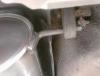
Bought a new muffler and the steel hangars on the muffler are straight and will just slide right out of the rubber hangars. 1999 Legacy wagon EJ22. They are also very short - too short to simply try and bend them one way or the other. Both rubber hangars point "inward" a little bit due to them being a little short to reach. Seems there has to be some simple way to do this? We can at least wrap the ends for now with duck tape or something but that's a short term solution. picture attached
-
i've never used a torque wrench on those, but there's zillions of FSM's online for free, i'd just get one with the timing belt procedure and hvae it on hand.
-
seafoam isn't a bad idea at all. while i doubt that's the issue, i wouldn't be fully confident in the duralast wires *on this engine*. EJ engines are unforgiving of low grade wires. other subaru engines could run with coat hangers for ignition wires (lol), EJ engines not so much. i've seen *brand new*, right out of the box, low end wires cause misfires on EJ engines. again, probably not it, but hard to rule out with those engines (or emissions requirements, whatever caused it), being kind of picky with ignition.
-
any other check engine lights other than misfires? what plugs and wires did you use? NGK plugs High quality wires Maybe the igniter on the firewall. Check fuel pressure - make sure it's not running lean. Fuel filter ever been replaced?
-
What he said: 95 auto has EGR, manual does not. If it's "crimped off" then it's been removed for some reason. Posting a picture of the back of the drivers side head and the EGR will help us determine what's going on. There's a few possibilities: engine was swapped, non-EGR long block with an EGR intake...etc.
-
What year is the RS? How much do you spend per year on owning a car (cost - not maintenance)? You're buying 30,000 miles for $2,000 if everything else is equal. That's a year or two of ownership for most people, pretty good value for only $2,000 more. The Outback is probably my vote - it's the newer generation, it'll age better, and have easy resale in the future. I'd guess Outbacks are more prone to easier use/better care. They cost more, worth more, and are used by grocery getter families. But that's circumstantial and impossible to verify. What headgasket was used? Were the timing pulleys and tensioner replaced or just the belt? If those aren't done properly then I wouldn't be too excited about them, unless they're willing to redo the timing belt properly - new pulleys and tensioner. If you're wondering who to believe - simply search for one of the threads where someone had a new timing belt break because the pulleys/tensioner failed and now they have bent valves to deal with. just helped someone yesterday in that same boat. It's not a huge percentage of failures, but enough that you don't want to get into that possibility with a brand new car/payment.
-
oh right, over the phone. i've had much better luck in person than over the phone.
-
more than likely a timing component failure. one of the 3 pulleys can seize, the tensioner can fail, or the bolt holding the tensioner broke - commonly happens after a timing belt installation - probably improperly disassembled/assembled/over torqued. they usually sustain valve damage, so there's probably 8 - 12 bent valves, that's about the norm. of course check to make sure you didn't get lucky - hang the belt properly and make sure they're bent first. best course of action if they have bent valves. 1. get a set of used heads *** 2. resurface the heads (no point to test or check them for pressure/crack/warp- they NEVER do) just an inexpensive resurface is all they need 3. install new Six Star, Cometic, or MLS Subaru headgaskets 4. adjust the valves 5. install a Gates timing belt kit - 3 pulleys and new tensioner. they're only $120 on rockauto or amazon. 6. reseal the oil pump and replace the cam seals while the timing belt is off. only takes a couple minutes. use Subaru or high quality seals at least. 7. add Subaru's coolant conditioner, it's $2.50 a bottle and required for that engine. *** alternately for #1 you can replace all the bent valves. but it's time consuming and the valves are expensive. it's cheaper to get a used set of heads and saves gobs of time. i've also had the problem where the valves are "bent" but it's nearly impossible to discern which are bent and which are not, even with straight edges, pulling them out of the head comparing side to side. sometimes they're completely whacked but some just get "touched" and barely tweaked. Done and reliable for 105,000 miles.
-
great, good find. some parts are reasonable from the dealer, many parts are not. that's the norm in the automotive business. the A/C conversion is easy and cheap to do it yourself. it's easily done without even changing any parts, that's how i always did EA/ER vehicles. the parts guys know that some parts are exorbitant and some parts aren't, the ones i've talked to have always been very helpful in that regard. they get it. he wasn't happy most likely because of your approach, if you "let him know that, on both parts", most people do get annoyed if someone complains about something that's not in their control or their issue/problem.
-
it's even plug and play interchangeable with the EJ22 if you're wanting to increase displacement as well or simply bolt your Ej22 heads to an EJ25 block, also direct swap...though even higher compression i believe.
-
melted timing belt covers isn't a good sign. a friend bought an EJ22 two years ago with melted covers and i told him i wouldn't use it, i was helping him remove/install his first engine....it had rod knock not long after he installed it. i'm not at all saying that happens every time, a chance it's perfectly fine, but it's certainly a sign that things got really hot. if you have time and don't mind redoing it or doing an engine swap if this doesn't work out - then give it a shot and go for it. i'm at a point in life where i don't want to be pulling an engine twice. there's 10,000 other things i'd rather do than yanking and installing an engine twice out of the same vehicle. and i could make a lot of money in that same amount of time so it's stupid to even consider (but i'm still awfully tempted to do stuff like this and would have 10 years ago). the only test i think you can do i think is to have the oil analyzed by cmopanies that do UOA. that would only be valuable if it's the oil that was overheated during the overheating episodes. call those companies and ask and they can tell you if they can get quantitative results of bearing material amounts in a UOA. or disassemble the engine and check the bearings...but that's labor/cost intensive as you already know and mentioned.
-
have to go forced induction to get those kind of numbers. forced induction on NA is precarious, monitor EGT's like crazy and go really low boost. i'd just plan on the engine blowing up and if you're really lucky maybe it won't. kevin - username myxaplyx...i can never spell it right...he had a turbo set up on an NA 1997 OBS he took very good care of and raced it/timed it/probably did dyno sheets on it years ago. i'd be looking for what he did if i were you. search here or NASIOC probably for his old posts from 10 years ago. reddevil did some fun work with forced induction on NA EJ's and blew up multiple engines in the process. read his thread for info and that's usually how it goes, blowing up and swapping lots of engines. swap in a turbo engine, H6, or for a little lower power you can bolt your EJ22 heads to an EJ25 block.
-
used post in the parts wanted forum here or look www.car-part.com call Subaru sometimes ebay has subaru parts available.
-
if the teeth are compromised, they'd be fine if you smoothed out any rough edges. you won't want to leave sharp edged divots. but yeah you did the right thing, just replace it.
-
yes, let is soak forever, for days, keep it always soaking at every possible entry point. soak and wrap with wet rags if you can of the liquid wrench. I wonder if you could drill a small hole all the way through the bushing so that you could slide a nail or punch all the way through it (missing the bolt of course) and lock it in place? then you can turn the bolt without any of that stuff rotating. i guess you see the bushing turning, that's why you know it's turning as well and the bolt isn't simply stripped? if it's turning shouldn't it be unthreading still? remove all the linkages from the bottom of the vehicle will get the entire assembly off the vehicle so you can work on it on a bench. you could also drill it out.
-
any machine shop, shop, welder, exhaust shop would weld it back on for you in 2 minutes and 8 times out of 10 i bet they won't bother to charge you for something that simple. i wouldn't use JB weld on a moving part seeing those kinds of revolutions/vibrations. the more static the application the better. the closer it is to moving parts and loads, chance of success goes down. someone else probably knows what the engine would do if it broke again. if the check engine light would come on until you fix it again, who cares, try it if you don't mind redoing the job again. if it's going to cause misfires and strand you, then i'd be less willing to get creative here. i'm not sure what would happen in terms of drivability with one of the reluctors missing, someone else may know?
-
tack weld the tab back in place. it receives no load and will work fine if it's done right. paypal my username here @yahoo $15 and i'll ship you one. buying new wouldn't be cost effective for a part that never fails.
-
1. valve cover gaskets, spark plug tube gaskets, spark plugs, adjust the valves 2. front differential gear oil (unless that was included in the "transmission service") & rear differential gear oil. 3. reboot your CV alxes. or alternavely check them. not just for breakage obviously they're not broke or yo'ud be asking/fixing them but check for any cracking in the valleys of the CV boots - particularly the inner boots, they break often. If the rubber is even partially aged, cracked, reboot them now with Subaru boots now that you have a good mechanic. Lesser mechanics (which are common) routinely throw away your perfectly good Subaru axle and won't reboot and install inferior aftermarket axles which are notoriously problematic (any google or subaru forum search shows dozens and dozens of aftermarket axle issues). If i plan on running a car to 300,000 miles I like installing a new Subaru alternator. Unfortunately new aftermarket alternators (even with a "lifetime warranty") aren't terribly reliable so they're not an option in my book. That's one item that may strand the vehicle and I drive a lot and long distances, so i replace my daily drivers between 150k-200k since i'm planning on about 300k. Another option is to keep a used spare in the trunk so it's no worries, i do this on my older Subaru's where new Subaru alternators are not readily available or worth the cost. www.car-part.com if you want a used one in the trunk. Subaru units will be very pricey, but that's the only way to get new showroom floor quality out of them. Not a bad idea to change the brake fluid and power steering fluid once in the life of the vehicle, now may be the time. Replace brake pads if they're low.
-
Must: Timing belt, tensioners, and all 3 pulleys. Gates kits on rockauto or amazon are only $120, they are inordinate and unnecessary from Subaru. Second: Water pump, camp seals, crank seal, reseal the oil pump Water pumps rarely fail in that engine, the pulleys and tensioner are more likely to fail and shouldn't be skipped. Subaru dealers are the worst place to get this job done. Dealer prices are too high, they never replace all the pulleys because it's cost prohibitive. You get 2 new parts and then leave 3 with 100,000 miles on them still in there, and they do fail. Kind of a silly approach for an expensive job - one dealer I know charges $450, another $699 for the belt only. Too much money not to do it right. If you have a good non-dealer mechanic you trust, make sure they use a Gates kit (not a lower grade ebay kit) and a Subaru water pump gasket is a must - the aftermarket gaskets are flimsy cardboard material and the Subaru gaskets are robust stamped metal. Huge difference. The water pump gasket is the only thing that should be from Subaru on this job. And the thermostat if you replace that. But that's easily done at any time, it doesn't require timing belt removal so I don't include it on the list though it's often timed with the water pump since it has to be removed and coolant drained for water pump replacement.
-
What fluid to use in 1988 XT clutch-type LSD?
idosubaru replied to dsmpowered's topic in Old Gen.: 80's GL/DL/XT/Loyales...
a few folks have used the Kendall stuff - it's just one bottle, probably basically what he posted above pre-mixed, but that's what i've always used. -
Typically you install a switch with simply two positions, it's been a couple years since I wired one but something like this, I've always used a DPDT switch (double pole, double throw): Position 1. "Locked" 4WD Position 2. normal AWD Position 1. nothing connected here - in this position, the wire isn't connected since it's not in Position 2 below. so power is cut to Duty C, "locking" it in 4WD. Position 2. simply attach the two ends of the Duty C wire you cut here - so that it completes the circuit as normal. then you get normal AWD That's how it's normally done for those that want to "lock" the 4WD themselves. Your case is a little different though - since you have torque bind so in position #2 you'd also want it in FWD - so actually I think it would be identical to every one else that's ever done it except you'll just leave the FWD fuse in place. Look up your Duty C wire in an FSM - at TCU under the dash above the gas pedal, silver metal box held in place with like 2 screws. Find the pin out for that one wire there, or in the engine bay at the transmission wiring harness.