Leaderboard
-
FerGloyale
Members3Points720Posts -
Crazyeights
Members3Points1733Posts -
jonathan909
Members2Points859Posts -
jdmleggy97
Members2Points83Posts




Popular Content
Showing content with the highest reputation on 01/26/19 in all areas
-
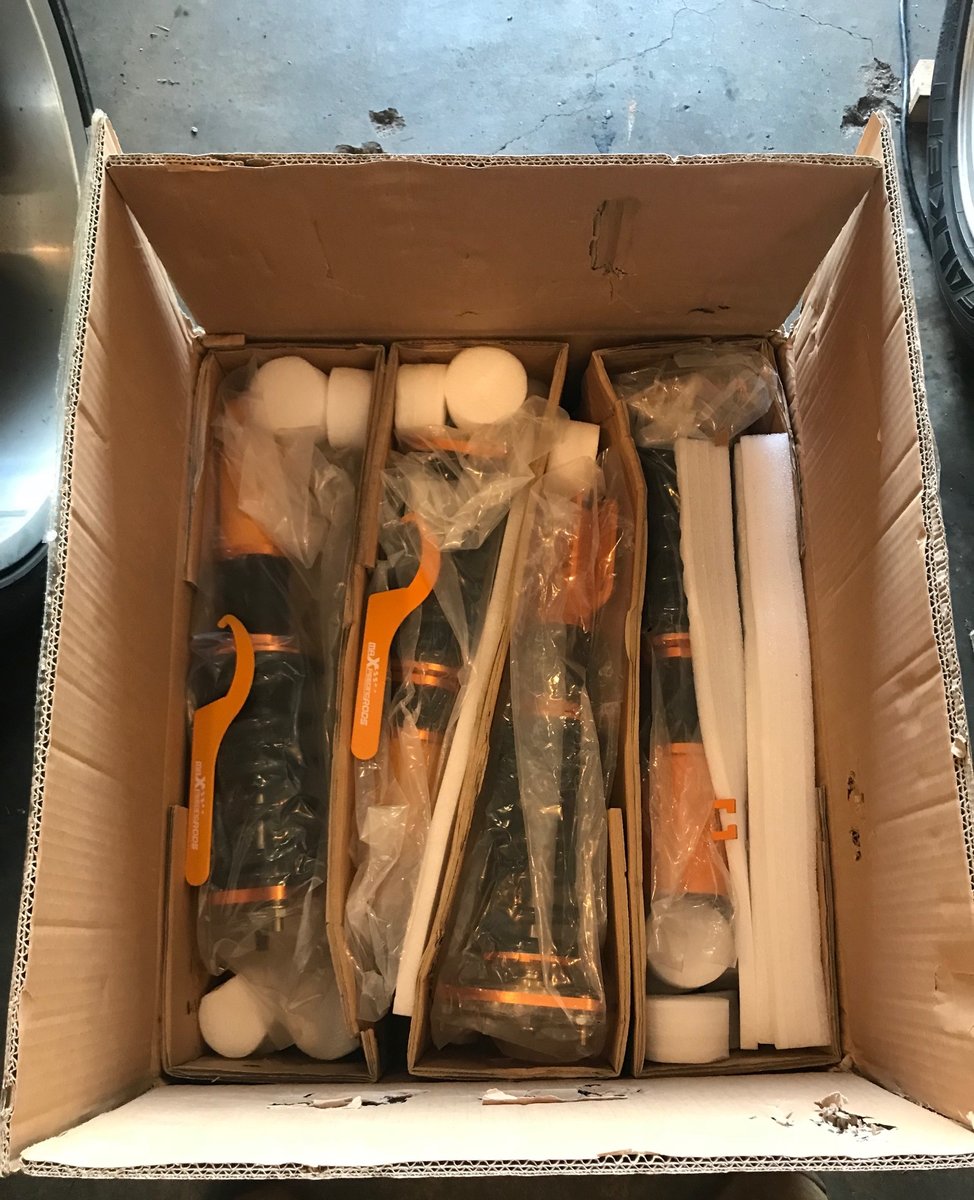
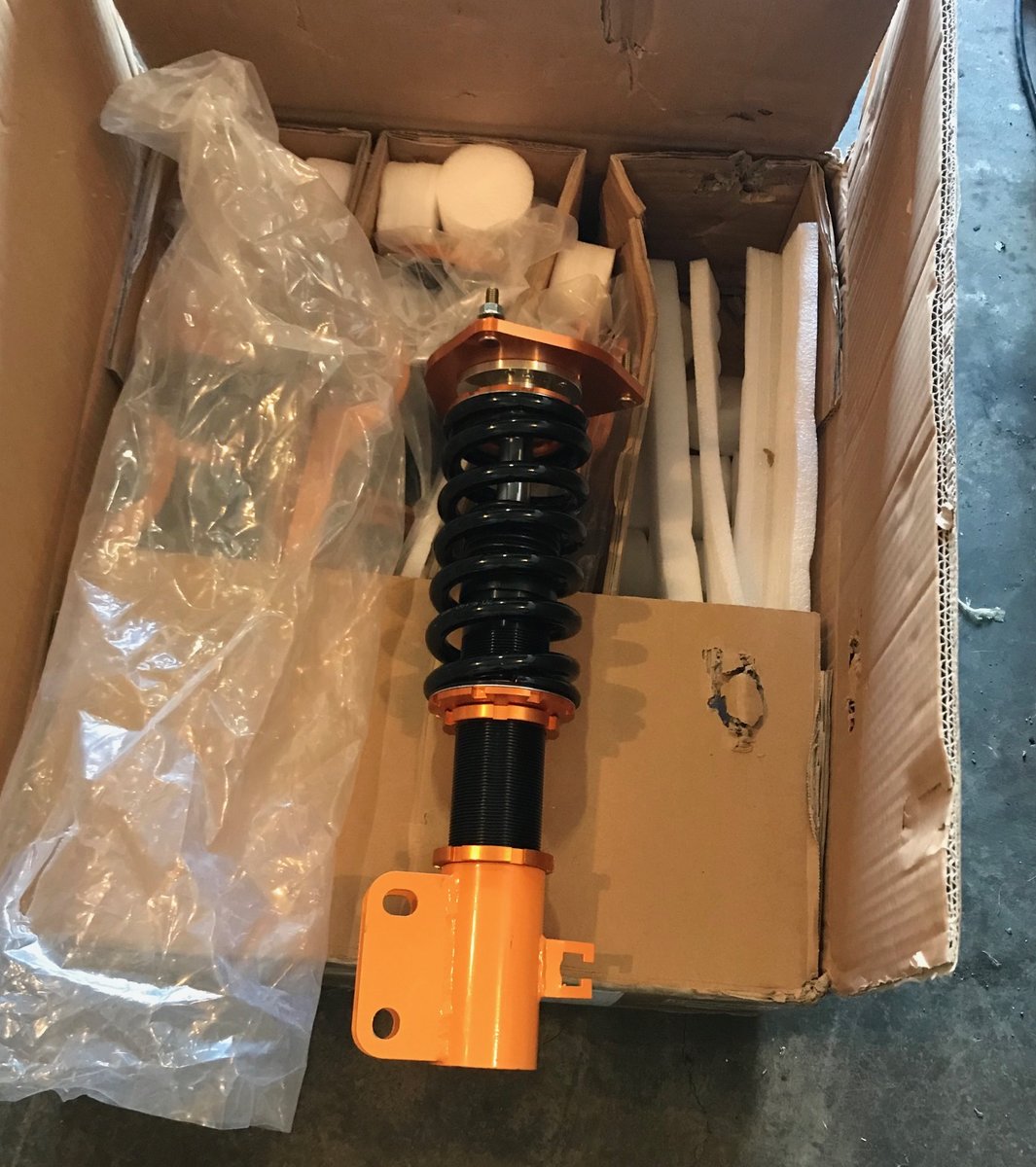
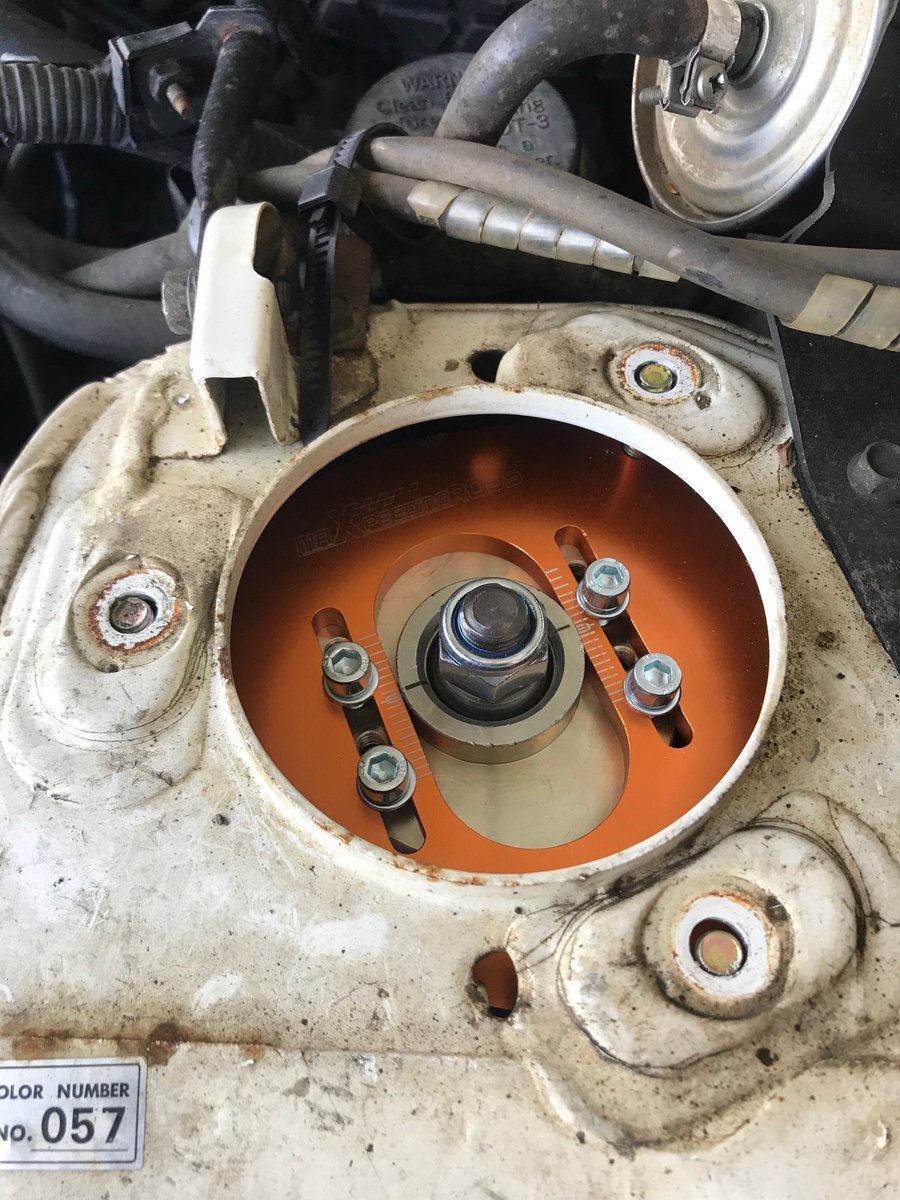
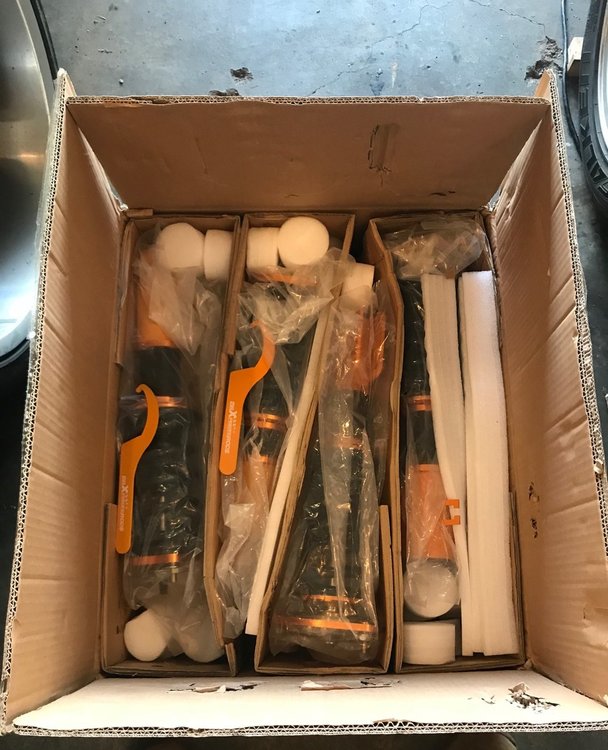
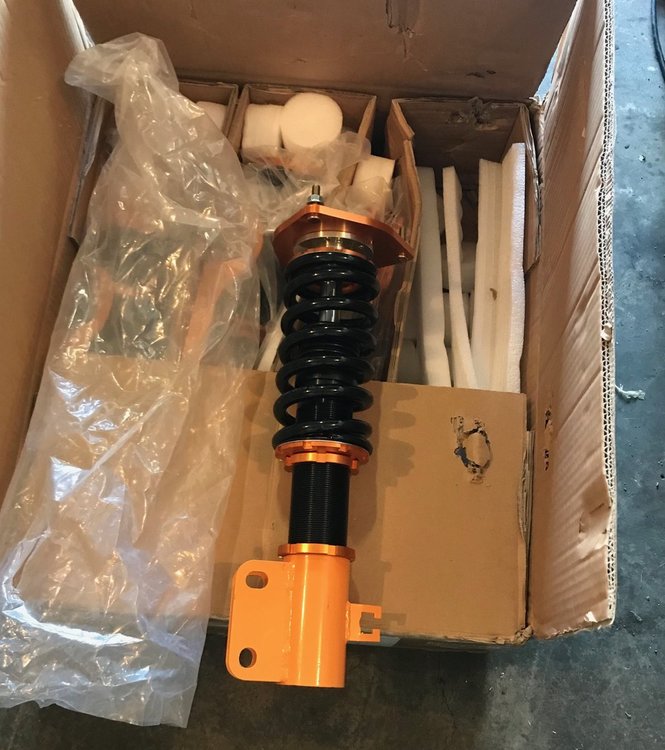
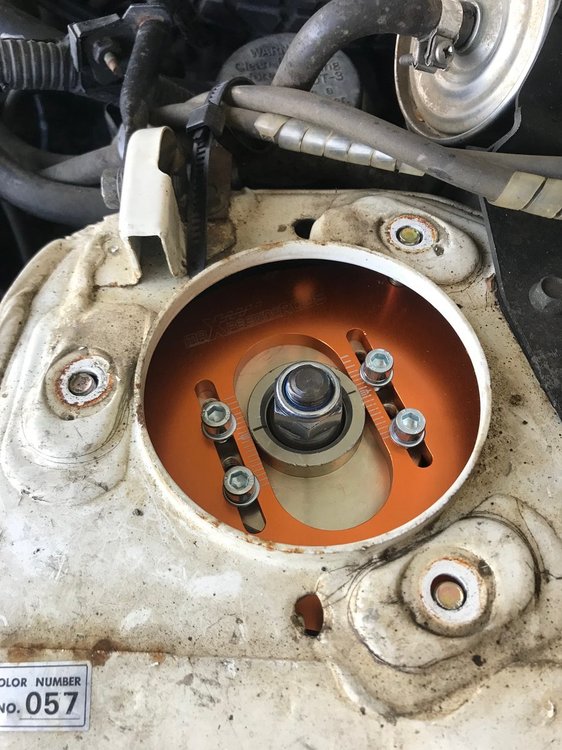
Delivery today! Super super cheap coilover suspension finally showed up! And when I mean cheap I mean cheap! I snagged the whole set for $180 shipped to my door! Honestly I won’t drive this car enough to be afraid of it failing if it even does, I’ve got more than enough to choose from so going cheap for this one scares me no bit! Besides that I went a different route than “Suberdave” he used 4th Gen legacy suspension and re drilled and welded the top hats. I chose the 3rd gen legacy suspension as the top hats are almost identically sized to older gen strut setups. Granted I have to open the holes a little and the camber adjustment I’m never goin to use is pointing the wrong way.... but hey. No welding lol. The rear suspension is the same as the 4th Gen legacy so mods will be similar to his to make them work!
 2 points
 -
So I had these pics posted in the "longtravel outbacks" thread. but I thought that since this is really an EA81 build, I would start my own thread. This is T-bone T-bone hop by Dans Subaru, on Flickr So here is the old EA 81 rear setup. Tired torsions and extra plateing and liftblocks, along with teh already low hanging EA81 diff, make the rump roast of this guy the biggest problem. Breakin axles and stubs....can't find any more good axles, so it's time to go. IMG_2594 by Dans Subaru, on Flickr I had thought about using an early Leggy or Forester setup.......but that would require full on strut mounts in teh back...which woud be lots of fab that there isn't room for. So I'm using the entire rear setup from an 03 Outback. Fitted with a Welded spider, 3.9 internal stub diff. Working on finding a VLSD for longer term road trip use. But for wheeling trips it's gotta be linclon locked for sure. IMG_3451 by Dans Subaru, on Flickr I modified this subframe to have equal length lower arms....hopefully better travel range possible once I get the right shock setup. For now it will use stock 03 outback shocks. IMG_3455 by Dans Subaru, on Flickr IMG_3445 by Dans Subaru, on Flickr IMG_3442 by Dans Subaru, on Flickr IMG_3461 by Dans Subaru, on Flickr IMG_3473 by Dans Subaru, on Flickr Here's the projected "full stuffed" point. IMG_3477 by Dans Subaru, on Flickr Here's the forward mounting of the subframe. Built mounting off of the old EA81 6" lift block (there is an EA81 torsion tube section between the body and the blocks) IMG_3486 by Dans Subaru, on Flickr IMG_3487 by Dans Subaru, on Flickr Sitting near ride height with wheels on. IMG_3489 by Dans Subaru, on Flickr And here is resting on it's own shocks. Literally it's just sitting on them....haven't actually made the shock mounts yet. Also need to finalize the Front trailing arm mounts and the sliders for them that will tie into the front/center subframe I have built. IMG_3491 by Dans Subaru, on Flickr1 point
-
Welp I feel like an idiot haha, but for any future readers I'll share what the problem was: I went to pinch off the front lines per crazyeights recommendation to narrow down between MC and front calipers and noticed the inner pads were sitting at a slight angle relative to the disc, on closer inspection I hadn't fully seated them in the notches, so the pad was sitting on the caliper brackets on the top side meaning the piston was flexing the pad when the brakes were pressed. Pulling the handbrake would pre-flex the pads thereby stiffening up my brakes. Pads took a slight curve from all this flexing so I replaced and everything's good now. Thanks everyone for the help.
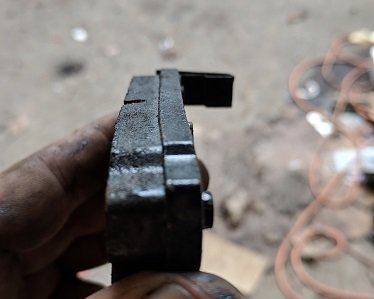 1 point
 -
I would bleed the system really well. You don't need a helper or too pump the pedal. Once you are sure the air is out if you still don't have any pedal the gently pinch off both front brake hoses and see if your pedal comes back. If it still doesn't then the master cylinder has to be junk. Good Luck, you are almost there.1 point
-
It's probably air in the system then. Usually if they are damaged either they leak or the parking brake fails. It sounds like you did everything right. Do you have access to a vacuum bleeder? I couldn't imagine living without mine.1 point
-
1 pointI've only seen coolant in the oil once. Very blown headgaskets. Not the early initial stages when the coolant just keeps disappearing, or small bubbles in the recovery tank. I've been down this road a number of times. My experience with the coolant level you describe - it may have been drawn down by a slow leak anywhere - to the outside of the block, down the intake. But the level low in the radiator + over normal temperature [does not have to get into or even near the red] has always lead to failed head gaskets, it might be 6 days, might be 6 months. I never had one consuming coolant down the intake at a high enough rate to show smoke [steam] in the exhaust. To have a chance of saving it while troubleshooting, checking the coolant level before every drive is the only way. Do not open the radiator cap, check the bottle level. check the radiator by sharply squeezing the upper hose, and listen for gurgles and the jiggle pin. A tiny amount of air is ok, but a really tight system will have none. The important clue is does the amount of air increase each time you check? Does the level in the tank constantly get lower every time? When the leak is in the beginning stages, it will be very slow, takes a week of doing this to start to get an idea. I also found that running a zero pressure cap helps sort out whether this is air leaking in vs head gasket beginning to inject exhaust gas failure. At high altitude, it might not be a good idea to run zero pressure, but where I am, I never had a problem. When it's an intake or external leak, a pressurized system will force coolant out while hot. While cooling, air sucks back in through the leak. When it's a combustion chamber to coolant leak, the explosions force exhaust gas into the coolant long before coolant can leak into the cylinder. Think about the difference in the pressure involved on either side of the gasket... With zero pressure, there isn't suction while the engine cools, and you loose less while running, because it isn't being forced out. If it's an intake leak, the vacuum will still pull it out, but without the help of the 13PSI pushing it also. You could try just doing the throttle body and intake to head gaskets, but it would be good to do all the above monitoring first, to determine if the exhaust gasses are getting into the coolant, because that only means one thing. Regardless of how far you have to go - removing any of the engine bolts is best done with the engine [the mass of aluminum, not just heating the bolt head is the key] near 180degrees F. Unless you have previously disassembled it and used anti seize compound. I have been amazed at some of the bolts that I got out in one piece using this trick - they would have certainly twisted off if done at room temperature. The worse ones still took carefully rocking them to work them out, but none stripped or broke.1 point
-
The parking brake is integrated in to the front calipers on those. Exactly how did you compress the pistons back in to the calipers? If you forced them straight in then the calipers may be damaged. I use a tool to wind them in.1 point
-
1 pointYou'll find KYB struts on ebay by the hundreds also. Also noticed they had hieght adjustable KYB fronts as well, which reminds me, I need to go and buy a set. Cheers, Al1 point
-
105,000 miles 105 months. If it's original and needs head gaskets do it all. Buy an Aisin kit instead of cheap Chinese Junk Gates or Dayco1 point
-
Interesting convo fellas! One other thing about these electric vehicles - battery replacement cost was mentioned. There’s another issue with the batteries - we don’t have any way of recycling them, or safely disposing of them. So no emissions while driving (yay!?) but what cost at end of life of the batteries?? And if two sets are required for the life of the vehicle? There are plenty of other fuel sources available that are renewable - cost will be an issue but if it comes down to it this will be used if we’re up against a wall so to speak. Also there was an Aussie fella that developed high effiencey steam engine or something to that effect. I believe it essentially ran on water - I don’t know how but I do know this isn’t really a good thing in Australia with our lack of water! Anyway, Edward Pritchard (spelling?) is the guy that did it. He made two running vehicles from Fords. The first only had “two gears” - forwards and reverse! The second was more conventional with a manual gearbox. One was stolen and never seen again. The other I don’t know what happened. Everyone he demonstrated this technology to shunned it and it sent him bankrupt. I’d love to see how this thing works as it intrigues me. It also shamed me how people can treat others when they’ve got some top ideas! Cheers Bennie1 point
-
Well after replacing the fuel pump, plugs & wires, and ignition coil, my car still ran like crap. I finally took it to a dealer. It turned out to be a bad EGR valve. Apparently, this is somewhat common on 05-09 Legacy/ Outbacks. I hope this info helps someone in the future.1 point
-
Well, nobody's threatening to come and pry your steering wheel out of your cold, dead hands - they don't have to. It's much more simple than that: Gas will simply be priced out of reach, then ultimately banned. You can keep as many big shiny metal planters as you want. This isn't like guns, where (Americans) have a (debatable) constitutional right to them. Nor is there a gas-guzzling-car equivalent of the NRA going to the wall to fight against end-run fuel restrictions, the automotive equivalent of the Brady bill. And the big petroleum companies are already showing signs of starting to divest of the worst of their hydrocarbon holdings i.e. the Alberta tar sands. They know what's coming down the pike, and if getting out of what is still their core business is what they have to do to preserve shareholder value, then get they will. As far as electric supercars go, I hope you caught the episode of The Grand Tour in which Richard Hammond wrecked the megabuck Croatian Rimac. He rolled it, then it burned for four days. Every time a battery cell blew, it set the next one alight, and they couldn't put it out. Just amazing.1 point
-
What he said. I'd bet Ujoints. And assuming the gear ratio is correct, the diff would swap right in.1 point
-
probably a U joint in the driveline. Not the rear diff. FWIW, the diff is bolt in. Uses same internal stub connection. Began here in 95 models.1 point
-
It's a small point, but one that separates the knuckle-draggers from the pros: Do not use tape. Just don't. It's amateur and ugly and in time the adhesive turns to goo and you (or the person who deals with it later) will be filled with hate. Use heat-shrink tubing, and the clear stuff so you can see what's underneath. Your work will look like a million bucks.1 point
-
1 point
-
Those aren't flashers, they are relays to the electronics in the car. IIRC, they are Blower motor, Left and Right Headlight, and Defrost. They should definitely be secured away from contact with metal.1 point
-
SPFI,I presume? Fuse 5 powers the ECU both directly and thru the ignition relay.(with some white wires) See pages 52 and 155 of the 2nd EA82 manual here http://jdfinley.com/file-downloads/subaru-manuals/1 point