DaveT
Members
-
Joined
-
Last visited
Everything posted by DaveT
-
DaveT replied to HASx11's topic in 1990 to Present Legacy, Impreza, Outback, Forester, Baja, WRX&WrxSTI, SVXTher is a leak somewhere. Probably very small now, and it evaporates on the hot block, or exhaust. There are a bunch of coolant hoses that should be replaced if they are old, not just the 4 most people think of. Running over normal temperature while low on coolant is very bad for headgaskets. Check for air in the cooling system by squeezing the upper radiator hose. Listen for gurgles and the jiggle pin. Ideally there should be no air. A small amount that doesn't change might be ok. If the air increases, and the overflow keeps going down, you have to find the problem before it gets worse.
-
All of these that I have owned, by this age and miles, were leaking oil from the oil passage through the head gaskets also.
-
DaveT replied to moosens's topic in 1990 to Present Legacy, Impreza, Outback, Forester, Baja, WRX&WrxSTI, SVXThere are 3 kinds of seals: The metal shields, which are not really seals. Rubber seals, typically black. Contact rubber seals, typically reddish orange. The last are the best at keeping crud and moisture out and grease in.
-
I did headgaskets in a 1976 in the car. Once. Those were a lot simpler than an ea82. After that 1 time, I made a stand to redo engines on. Reseal a spare, get it all ready, then do the swap into the car. But I have space and spares and the stuff...
-
Water test is good. I tested mine in car. Since it was still driveable, I just connected my ohm meter when I got home, and made a number of readings as the engine cooled down. In my case, the resistance was jumping around, not gradually changing with temperature like it should be.
-
It's been years since I've seen a DL. I had a 1978 with 4 round headlights, and modified the lighting - Put 4 quartz halogen H4 Hi / Lo lamps on it. Made a custom harness and relay box and control ppanel on the dash. I could set it to look and function normally, or a number of other additional combinations - Either pair of low beams, dual = quad low beams. high beams with lows on also, and all filaments energized, which was 55W*4=220W and 60W*4=240W for a total of 460Watts of light out front. Along with a pair of 55W fog lights. I also had externally mounted heavy duty rectifiers for the alternator, because of course the internal ones died. This was all back before I was a homeowner, and had more time to play with mods. I've thought about doing the 4 square DL system on my Loyales, but the list of projects is so long. It would be easier to make LEDs anyway, and I wouldn't need a bigger alternator.
-
If the nuts are seized on the studs, get new studs and nuts. Use anti seize compound when you reassemble. If the nuts are not too badly stuck, I have clamped the stud in a vise, with scraps of aluminum to protect the threads. Heat the nut with a torch if needed. But if they are very rusty and crusty, it's still better to get new ones.
-
-
DaveT replied to jeryst's topic in 1990 to Present Legacy, Impreza, Outback, Forester, Baja, WRX&WrxSTI, SVXBurning a quart per 300 miles is not enough to make visible smoke. I had an EA82 that was doing that. It had been overheated pretty badly, It had no knock or any other bad symptoms, so I resealed it, but didn't think of checking the oil rings. It even passed emissions. I ran it for years on used oil and whatever cheap oil I came across, until one of the heads cracked.
-
-
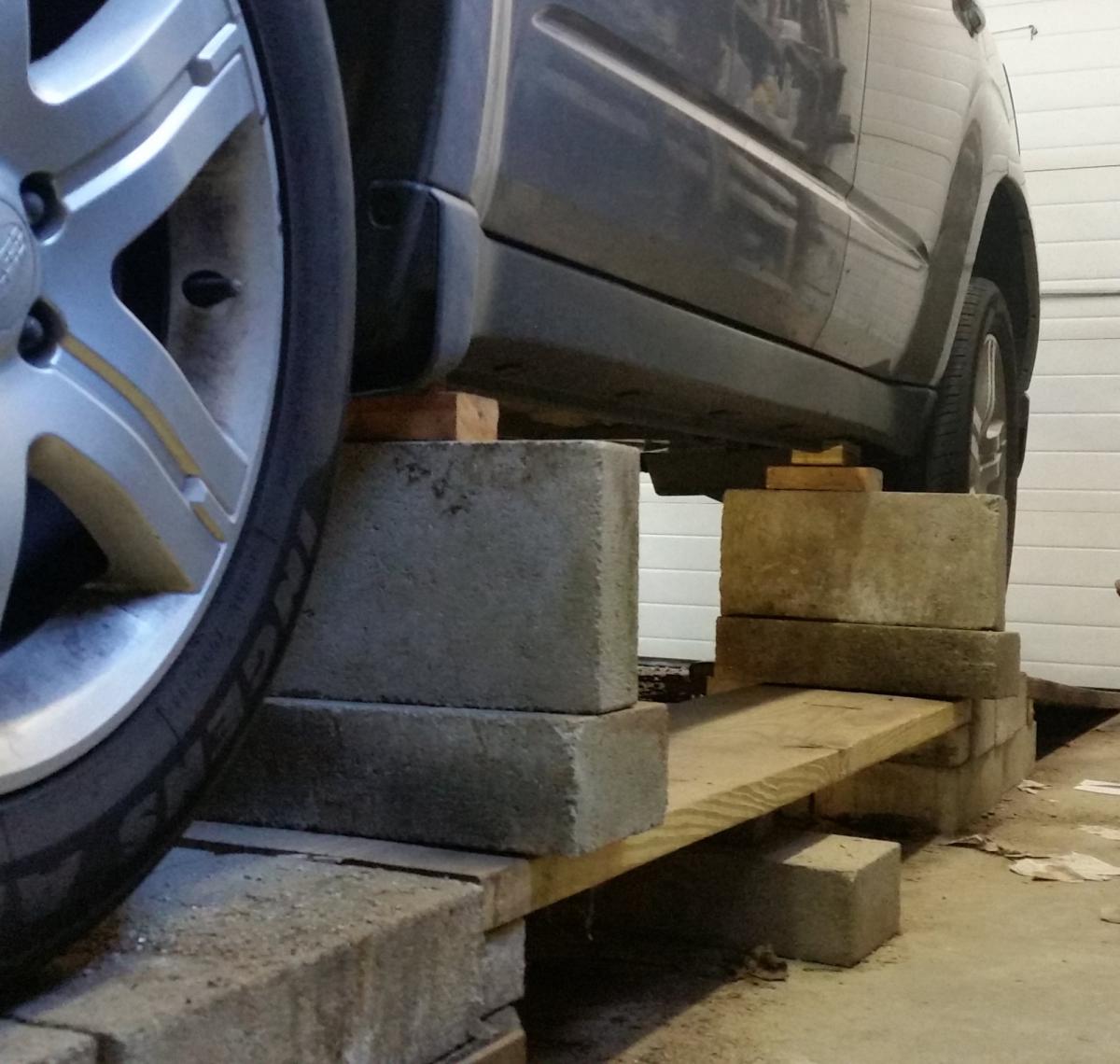
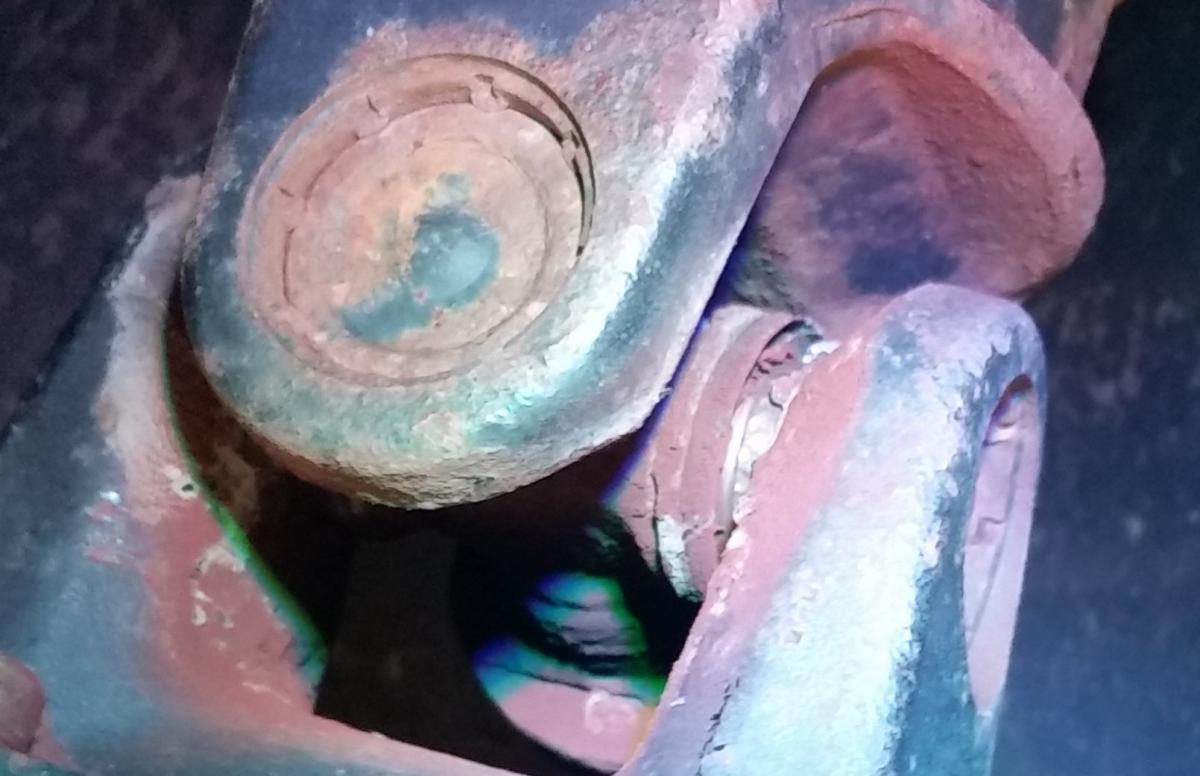
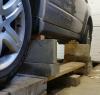
DaveT replied to DaveT's topic in 1990 to Present Legacy, Impreza, Outback, Forester, Baja, WRX&WrxSTI, SVXGot the car up off the wheels today. Ran it in gear, wheels spinning. Nothing conclusive listening through a hose to each hub. Not much via a rod either. After a while, I did catch a couple mettalic creaks. I checked the driveshaft after shutting it down. On the rear universal joint, one of the cross shaft seals is gone. Bare shiny metal and rust powder. Hmmmmm. Wheels off the ground - [note - the concrete blocks used are solid.] Bad U joint -

-
Not a problem, there are lots of things that can go wrong - it helps to hear about what are common failures to save time.
-
That will do it. No idle when that wire is open. I had one do that.
-
I don't think alcohol would bother it. It has to deal with fuel etc. The CTS can fail and cause all kinds of idle and starting problems. Read the blinks on the led on the ECU under the steering column. You have to remove the plastic panel to see it.
-
DaveT replied to DaveT's topic in 1990 to Present Legacy, Impreza, Outback, Forester, Baja, WRX&WrxSTI, SVXThe noise didn't change with quick left right steering. I'll have to try someplace in a parking lot where I can go in a tight circle.
-
The car has developed a low growl / rumble vibration and sound that varies with road speed. Feel it in the steering wheel, and the seat. At certain speeds, things in the cabin rattle. 175,000 Miles. What's most common - wheel bearing? Drive shaft?
-
If it is a stock EA82 Loyale from 92, the MAF is the chunk on the air cleaner box. It should start and run with or without the intake boot attached to the throttle body, but obviously the ECU can't fine tune the mixture with it off. The ECU does not try to fine tune the mixture until the engine is at normal operating temperature.
-
Anti diesel solenoid shuts off fuel at idle. Must be powered open to idle. Accelerator pump output was a visible squirt / stream of fuel on the carbs I dealt with. It's safest to look with the engine off...., hold the choke open, open the throttle by hand, look down the primary. Be aware of possible splash of fuel.
-
-
Is the cranking rythm even like it always was? If a timing belt broke, it will be oddly uneven. Other easy check - pull the cap off the distributor. Have someone watch the rotor and someone crank. Of use a socket to turn the crank pulley bolt. If the rotor doesn't move, it timing belt time. The coolant temperature sensor can make hard starting also.
-
Dealer. Theoretically, a good industrial supply place but you have to have dimensions for them to belp.
-
What is this 90 degrees twist? Never heard of it. Squealing is caused by too loose. Cars with power steering and or a/c would use 2 belts.
-
The temperature sensor tells the ECU how much fuel the engine needs to run. A cold engine needs a LOT more fuel. It works similar to the choke on a carburetor. So if the sensor has failed in a way the the ECU thinks the engine is hot, it won't give it enough fuel to start and run when cold. I had a CTS go intermittent on one of mine a while back. It was causing all sorts of odd behavior. From hard to start, to sudden high idle when warm at a stop. It gradually got bad enough and consistent enough to figure out what it was. I figure that sort of sensor, close to 30 years old, it's due.
-
More force is often not the way to go.. Time to get a Dremel and some carving burrs.
-